
25th September
If the Human Species Ceased to Exist Would that be a Bad Thing?
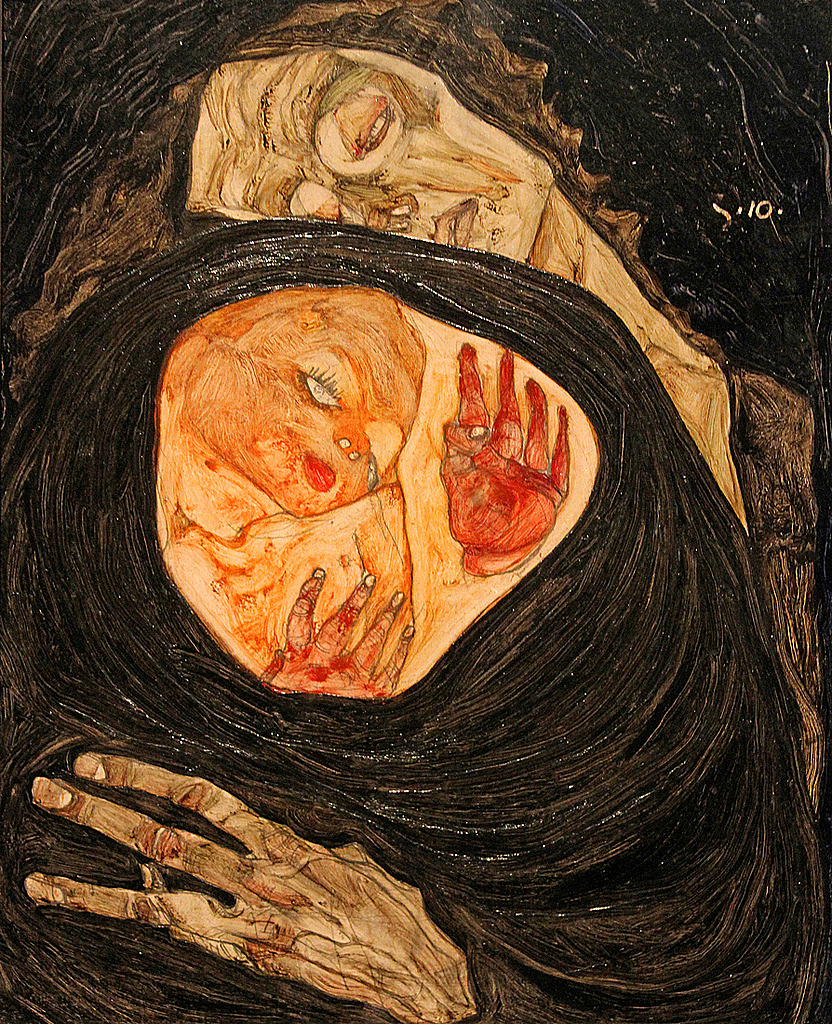
We are so proud of ourselves as a species! Maybe in the past, we thought we were the best thing ever. But do you think the planet, or even the universe, would be a better place if we didn’t exist at all, or had never existed? Our existence is totally contingent. There’s no reason why we need to be here. When you think about the violence, destruction and harm we’ve caused in our short time on this planet, it makes you wonder if might be better if we never existed. If that’s true, would it have been better for each of us to never have been born, and if we’ve had the misfortune to be born, never to procreate?
This is a social and open discussion meeting. It is a nice opportunity to say ‘hello’ after the summer for new and old members.
If you are interested in exploring anti-natalism in greater depth, then this is a useful website. https://iep.utm.edu/anti-natalism/
This meeting will take place in the Director’s Lounge at the Everyman in Cheltenham. Here is their website. https://www.everymantheatre.org.uk/
7th October
Researching the ‘gender wars’ during a war on LGBTQ+ rights. A talk by Finn Mackay (UWE)
Finn Mackay is a longstanding feminist activist and writer and researcher in queer theory and LGBTQ+ rights. Finn is the author of two books ‘Radical Feminism: Activism in Movement’ published by Palgrave, and ‘Female Masculinities and the Gender Wars’ published by Bloomsbury. This talk will cover the experiences of researching trans rights and LGBTQ rights at a time of backlash and provide a brief summary of research into queer masculinities and female masculinities.
Finn is currently a Senior Lecturer at the University of the West of England in Bristol, with a PhD from the Centre for Gender and Violence Research at the University of Bristol, and a professional background in youth work, education and training including with the women’s sector and in national policy on domestic abuse prevention education.
Finn is a Trustee of the Feminist Archive and the British Sociological Association and on the Editorial Board of the International Journal of Lesbian Studies, and is a proud Ambassador for the Worker’s Educational Association.
23rd October
A surplus of fiction? Robot and AI substitutes to human relationships. A discussion with Kathleen Richardson (De Montfort University)

Kathleen Richardson is a Professor of Ethics and Culture of Robots and AI and part of the Europe-wide DREAM project (Development of Robot-Enhance Therapy for Children with AutisM).
Kathleen completed her PhD at the Department of Social Anthropology, University of Cambridge. Her fieldwork was an investigation of the making of robots in labs at the Massachusetts Institute of Technology. After her PhD Kathleen was a British Academy Postdoctoral Fellow (BAPDF), a position she held at the University College London. Kathleen’s postdoctoral work was an investigation into the therapeutic uses of robots for children with autism spectrum conditions. In 2013, she was part of the Digital Bridges Project, an innovative AHRC funded technology and arts collaboration between Watford Palace Theatre and the University of Cambridge.
Kathleen is author of An Anthropology of Robots and AI: Annihilation Anxiety and Machines. Kathleen has completed her second book Challenging Sociality.
In 2015 she, along with her colleague launched the Campaign Against Sex Robots to draw attention to problematic effects on new technologies on human relations, and their potential impact to create new layers of inequalities between men and women and adults and children. She advocates a compassionate and violence free technology based on freedom ethics and is critical of coercive and violent models of human lived life that are transferred to the making of new technologies. Richardson is developing a theory of robotics inspired by anti-slavery abolitionist feminism.
6th November
Creation out of Nothing. A talk by Lars Iyer (Newcastle University) and William Large (University of Gloucestershire)

In the first part of this talk, William Large will explain the historical development of the idea of ‘creation out of nothing’ from the challenge of philosophy to monotheism. The requirement that God created both matter and the form of matter led to an ontological innovation that culminated in the idea of participation in Aquinas and a new way of thinking about God’s being. In the second part of the talk, Lars Iyer will contrast the the idea of creation out of nothing with creation out of matter through the Hebrew expression tohu va-bohu, and the persistence of evil in the world.
Lars Iyer is a Professor of Creative Writing at Newcastle University. Before joining Creative Writing, he taught philosophy for many years at Newcastle University. He has published widely on aesthetics, with special emphasis on the philosophy of literature, and has a particular interest in the philosophy of music.
He has published six novels, which, by their formal experimentalism and subject-matter, are rooted in European traditions of literature, and have been linked by reviewers to Beckett and Bernhard. His novels reflect his interests in the Continental European thought and are fundamentally comic in style and vision. They have been translated into several languages and long- and shortlisted for various awards.
William Large is a Associate Professor of Continental Philosophy at the University of Gloucestershire. He is the author four books, Maurice Blanchot [co-authored] (Routledge, 2001) Ethics and the Ambiguity of Writing: Emmanuel Levinas and Maurice Blanchot, ( Clinamen, 2005), Heidegger’s Being and Time (Edinburgh University Press, 2007), and Levinas ’Totality and Infinity: A Reader’s Guide (Bloomsbury Academic, 2015]. His articles have appeared in The Journal of the British Society of Phenomenology, Theology & Sexuality, Textual Practice, Literature and Philosophy, The Journal of Nietzsche Studies, Angelaki, Journal of Cultural Research, Religions, The Journal of Cultural and Religious Theory and The Journal for Continental Philosophy of Religion.
20th November
The Extended Mind and Enactivism. A talk by John Harries (Oxford University)

There is a long tradition in the philosophy of mind, psychology and the cognitive sciences which locates cognition firmly inside the skull and which draws extensively on the metaphors of computing to describe the architecture of the mind. This neuro-centric view has been reinforced by the development of neuroimaging technologies, in particular Functional MRI. However in recent years there has also emerged a view of cognition with its roots in American Pragmatism and Phenomenology which radically extends the boundary of the mind to include the body and the surrounding environment and which gives due weight to the often overlooked role of affect (mood and emotion). The term “4E cognition” has been coined to describe this approach. The overlapping concepts of 4E describe the mind as embodied, embedded, enactive and extended. In this view the mind emerges in the interactions of embodied organisms with their environment. In my short presentation I will try to do justice to the key ideas of enactivism and the extended mind and why they open up rich research horizons and provide an exciting alternative to neuro centric approaches to cognition.
John Harries’ career has been divided between IT systems development and Organisational Development often combining the two. I have focused principally on the domain of healthcare in the UK, Europe and the USA. For some years I was a Fellow of the King’s Fund a charitable healthcare think tank and consultancy. Some years ago my dissertation for an MSc in Organisational Psychology at Birkbeck (London University) studied early adopters of mobile email. I was struck by the strength of emotional attachment displayed by the users of Blackberries for their devices. This phenomenon has of course exploded with the adoption of smart phones. I have since pursued this interest in the emotional relationships between people and things, in particular architecture. After my retirement I was accepted to study for a Doctorate in Cognitive Archaeology at Oxford University under the supervision of Professor Lambros Malafouris. I completed this in 2021. My dissertation was entitled “Affect and Materiality in Therapeutic Spaces” and focused on the emotional relationship between people (staff, patients and families) and the environment in which they worked or in which they or their loved ones were cared for. In my research I made use of Material Engagement Theory (Malafouris 2013) with its foundations in Enactivism and the Extended Mind.
4th December
Place and the Importance of Being There. A talk by Tom Spooner (University of Gloucestershire)

This talk will be about ‘place’, that is, place as a lived setting comprising both physical and emotional phenomena. Exploring historical developments in Western thinking, and ideas relating to globalism and the arrival of the digital age, place will be discussed as an idea that is commonly obscured from everyday experience today. With reference to his own artistic practice, and the thinkers informing his approach to making work, Tom will talk about why place matters to him.
Tom is an artist and educator currently teaching on the BA Illustration course at the University of Gloucestershire. Since graduating from the Royal College of Art in 2016, he has exhibited, published, and taught widely, in the UK and abroad.
All talks will take place at the FCH Campus of the University of Gloucestershire in Rm. HC203.
You can find a map of the campus here: https://www.glos.ac.uk/visit-us/our-campuses/francis-close-hall-campus/
All talks start at 7 pm and usually last for an hour.
We are a local partner of the Royal Institute of Philosophy and these events are funded by a grant from them. Their website can be found here: https://royalinstitutephilosophy.org/.
Contact email is: glosphilsoc@gmail.com
 Gloucestershire Philosophical Society