
5th February
Evil – does it exist and if so, what is it?

Is evil real or just a human construct? Is there a difference between an evil act and one that is merely unfortunate? Can we speak of a radical evil that goes beyond any moral law and towards which there could be no recompense nor forgiveness, such as genocide or the torture of innocents? Kant argued that radical evil was a fundamental flaw of human nature that placed our own selfishness above morality. Perhaps you have your own version of radical evil, or maybe you believe no such thing exists.
This is a social and open discussion meeting. It is a nice opportunity to say ‘hello’ after the Xmas and the New Year and to meet old and new members.
This meeting will take place in the Director’s Lounge at the Everyman Theatre in Cheltenham starting at 7 pm. Here is their website. https://www.everymantheatre.org.uk/
If you want to find out more about what philosophers think about evil, then you might want to read this https://plato.stanford.edu/entries/concept-evil/.
I hope to see you there.
19TH February
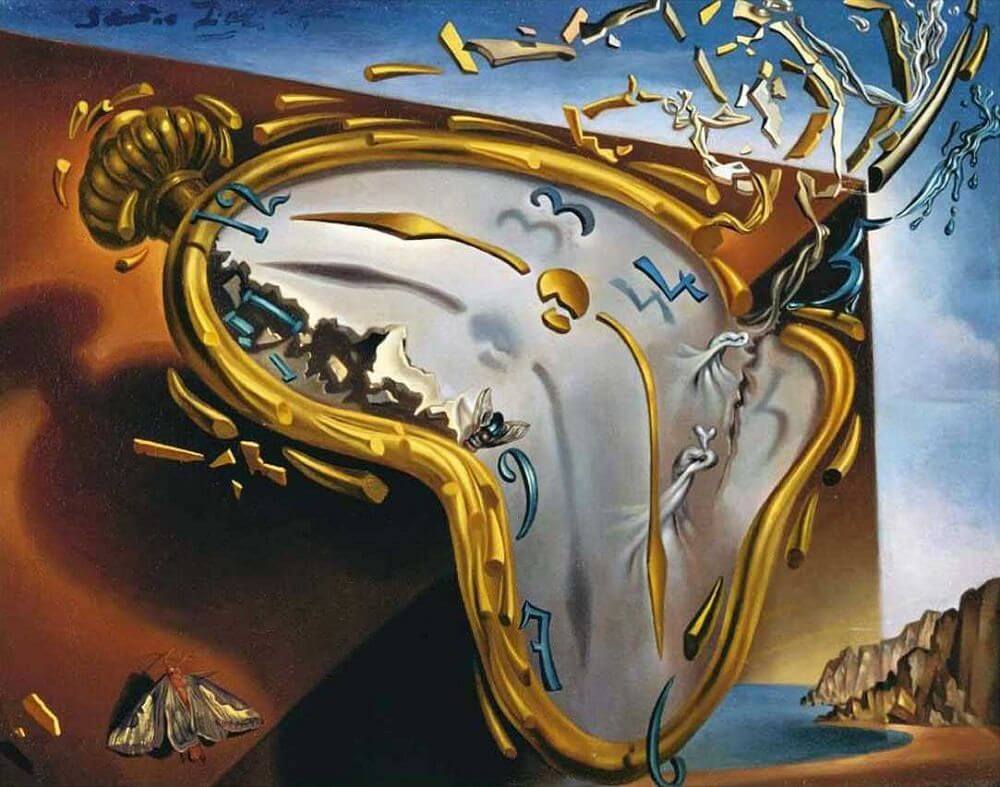
Time and how it’s marked, and effects our lives. A discussion led by David Garnett
David has been a member of the GPS for over 12 years and this will be his fourth talk to the Society.
He is a social constructionist and his presentation is based on how individuals and society construct their understanding of the world with the main theme being how we deal with Time and how it’s marked, and effects our lives, The presentation also includes how we all construct mental models and use them in our daily lives. The session will be part interactive and participants are encouraged to get involved.
5th March
What’s in a Cultural Hegemony: ‘Feel-Good’ Literature, Chronic Fatigue Syndrome (ME/CFS), and Capitalism. A talk by Amélie Doche.

Amélie Doche is an AHRC-funded doctoral researcher in English language and literature at Birmingham City University. Her PhD – carried out in collaboration with the literature development organisation Writing West Midlands – explores discourses of value in contemporary literary culture. Amélie’s articles have appeared in Textual Practice, Iperstoria, The Journal of Languages, Texts, and Society, and English Studies. She’s happy to be contacted via email (amelie.doche@mail.bcu.ac.uk) or on X (@LaDoche).
My talk focuses on hegemonic discourses of value as they intersect with feel-good literature, online discourses of ME/CFS recovery, our culture of immediacy, our society’s fetishisation of self-help (to cure one’s mental and physical diseases) and self-improvement (to increase one’s performance and success). During times of personal and cultural crises, a majority of readers turn to feel-good romance and pop poetry for comfort and escapism. I read the production and reception of Donna Ashworth’s Wild Hope and Kim Nash’s Escape to the Country – among others – diffractively through the lenses of mass-entertainment consumer culture, mental capitalism, performative vulnerability and sincerity (assessed in the author – ad hominem), the instrumentalisation of imagination in popular self-help, and individualism. My presentation is structured into three main sections. The first section explores readers’ attraction to feel-good genres within the context of contemporary cultural dynamics. The second section analyses feel good and discourses of ME/CFS recovery focusing on a specific mode of knowledge activation: archetypal, where the myth of personal salvation is both reinforced and co-created. The final section examines the allure of feel-good genres and discourses of ME/CFS recovery in connection to current tendencies toward magical thinking –an intensified form of positive psychology – and infantilism.
19th March
Forms of Nature: how to draw the line between real nature and manmade copies. A talk by Maria Balaska.

This talk responds to an increasing presence of synthetic nature and the consequent blurring of the boundary between what is natural and what is artificial. It investigates whether and how we can still hold a conceptual distinction between real nature and artificial nature, and our experiences of them. Drawing from Aristotle and Heidegger on the Greek concept of phusis, it rejects the idea that nature is reducible to matter -and therefore not essentially different from what is manmade- and puts forward, instead, a dynamic view of nature as informed and intelligible activity. The fact that qua activities beings by nature are comprehensible and intelligible to us while being irreducible to our own purposes creates a special link between nature and the human mind, which is absent in the case of replicas.
Maria Balaska is a research fellow at the philosophy department of Åbo Akademi University, Finland. She works on Wittgenstein, Heidegger, and the philosophy of psychoanalysis. Her current research project, funded by the KONE Foundation, investigates the conceptual distinction between real and fake nature. Her latest book is Anxiety and Wonder: on Being Human (Bloomsbury, 2024).
2nd April
Deus sive Nature: An Introduction to the Philosophy of Benedict Spinoza. A talk by Christopher Thomas.

Benedict Spinoza has been referred to as ‘The Renegade Jew Who Gave Us Modernity’, but his philosophy nevertheless remains eclipsed by his more famous contemporaries, including Rene Descartes and Gottfried Leibniz. Unlike Descartes’ cogito ergo sum and Leibniz’s principle of sufficient reason, Spinoza’s most significant ideas, including his now infamous phrase Deus sive Natura, remain largely unknown and misunderstood. In this talk I will introduce two of Spinoza’s core ideas: His substance monism and his philosophy of affect and show how the former leads into, and offers a ground to, the latter.
Dr Christopher Thomas is a Senior lecturer in Philosophy at Manchester Metropolitan University. My research interests include early modern philosophy–specifically the philosophy of Benedict Spinoza–, contemporary French philosophy–specifically the philosophy of Gilles Deleuze and Simone Weil–, aesthetics, and art theory.
7th May
The value of anxiety in Kierkegaard and Simone de Beauvoir. A Talk by Erin Plunkett.
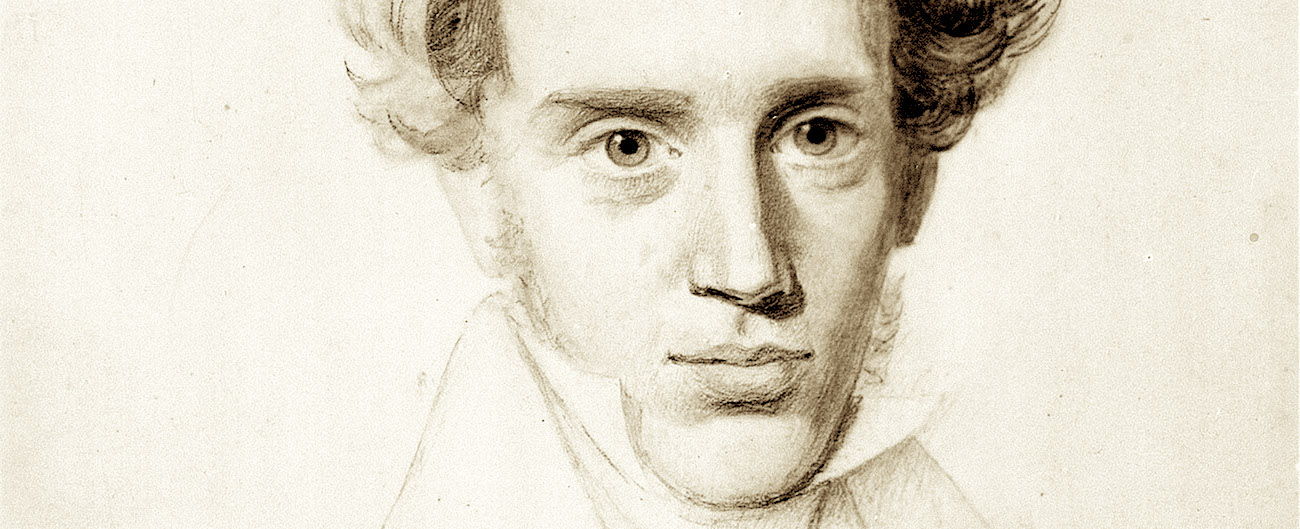
There has been an explosion of anxiety in recent years, both diagnosed anxiety disorders—the most common mental health disorder worldwide—and wider feelings of anxiety, especially acute among young people. Existentialism and phenomenology offer a rich resource for thinking about the meaning of anxiety, one that has contributed to psychotherapeutic discourse but also diverges from it. While most therapeutic approaches and increasingly educational practices aim at the reduction of anxiety, Kierkegaard and Beauvoir argue for anxiety’s value, particularly for its role in forging a meaningful existence. For Kierkegaard, anxiety is a ‘holy hypochondria’ that won’t allow us to forget the spiritual dimension of ourselves.
Dr Erin Plunkett is Joint Head of Philosophy at the University of Hertfordshire and works on Kierkegaard, phenomenology, existentialism. and philosophy of religion. She is the editor of Kierkegaard and Possibility (2023) and The Selected Writings of Jan Patočka: Care for the Soul (2022), as well as the author of A Philosophy of the Essay (2018).
21st May
AGM
All talks will take place at the FCH Campus of the University of Gloucestershire in Rm. HC203 except the social discussion, which is at the Everyman Theatre in Cheltenham.
You can find a map of the campus here: https://www.glos.ac.uk/visit-us/our-campuses/francis-close-hall-campus/
We are a local partner of the Royal Institute of Philosophy and these events are funded by a grant from them. Their website can be found here: https://royalinstitutephilosophy.org/.
Contact email is: glosphilsoc@gmail.com
 Gloucestershire Philosophical Society