
11th February
Values – what would you live or die for?
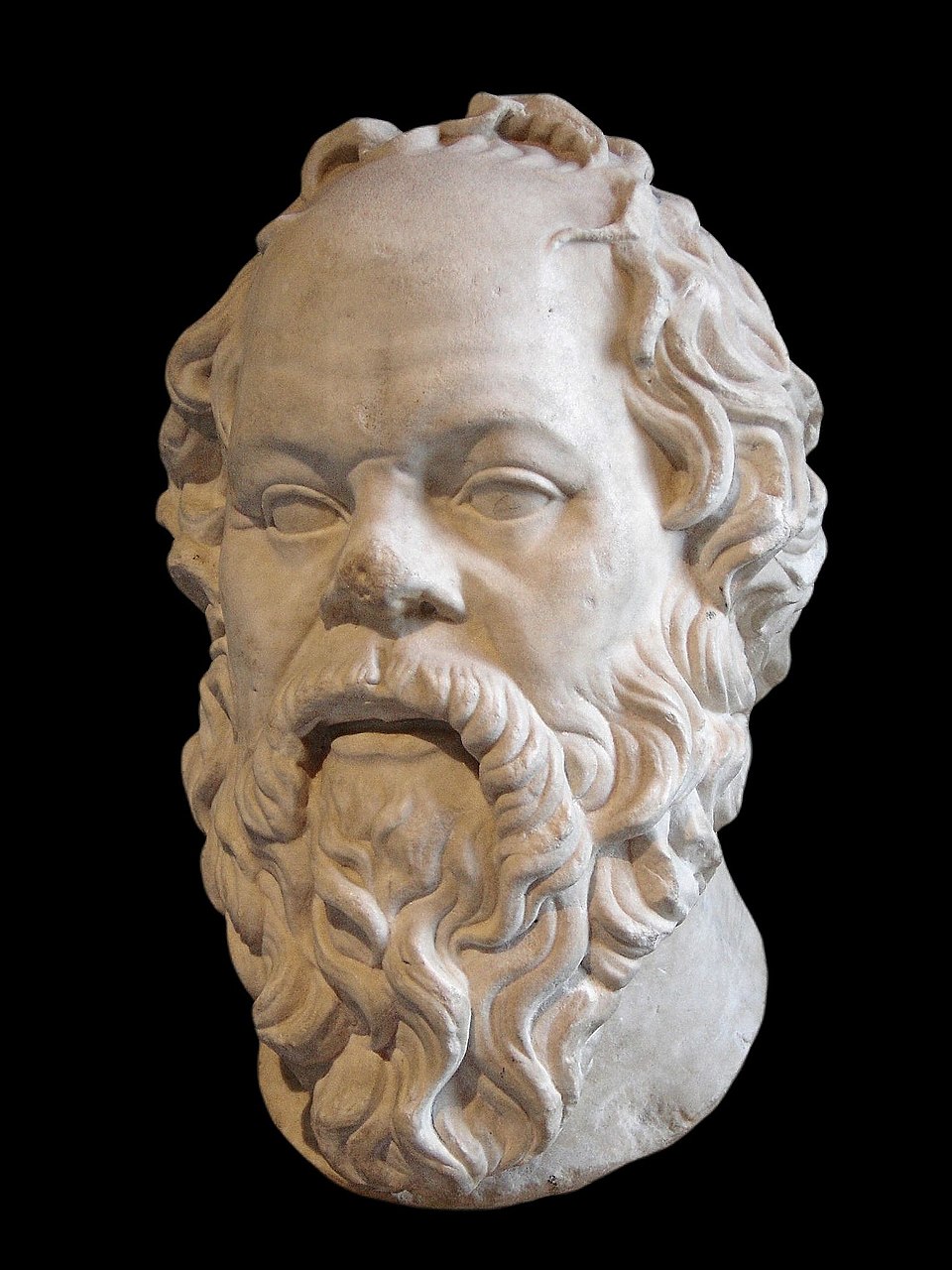
n 399 BCE, a man stood before a jury of 500 fellow citizens and told them they were living their lives backward.
Socrates didn’t mince his words. He accused the Athenians of being obsessed with wealth, reputation, and status, while their true selves lay neglected. He famously argued that the unexamined life is not worth living. He was willing to sacrifice himself for the truth he believed in rather than turning his back on his values to save himself.
We live in a world that Socrates would find familiar. We are constantly pressured to value what is visible, measurable, and profitable. But if everything was stripped away, what would remain?
The question for our first meetup is simple but perhaps the most important philosophical one of them all:
- What are the values you are currently living for?
- More importantly, is there anything you would be willing to die for?
25th February
The History and Future of the BBC. A Discussion with Tom Mills

The BBC is one of the most important institutions in the UK; it is also one of the most misunderstood. Despite its claim to be independent and impartial, and the constant accusations of a liberal bias, the BBC has always sided with the elite. Today its operations have been thoroughly commercialised and its management politicised, and it remains largely unaccountable to the public it claims to serve. In recent years it has lurched from one political crisis to another, and neither its leadership, nor the politicians to whom it is ultimately answerable, seem able to articulate a coherent vision for public media in the digital age. What lies behind the failure of the BBC to live up to its promise of independent and impartial journalism? And can this imperial-era broadcaster be transformed into a digital media operation directly accountable to its audiences?
Dr Tom Mills is Senior Lecturer in Sociology at Aston University. His academic work combines media and communication and the sociology of elites. Both are concerned with examining powerful organisations and networks and their impact on democracy. He is a former chair of the Media Reform Coalition and is the author of The BBC: Myth of a Public Service, a book which examines the BBC’s relationship with the state and the ways in which the rise of neoliberalism impacted on its organisational structure and culture.
11th March
The Labyrinth Solution: the world of David Bowie & the film-philosophy of Gilles Deleuze. A Talk by David Deamer
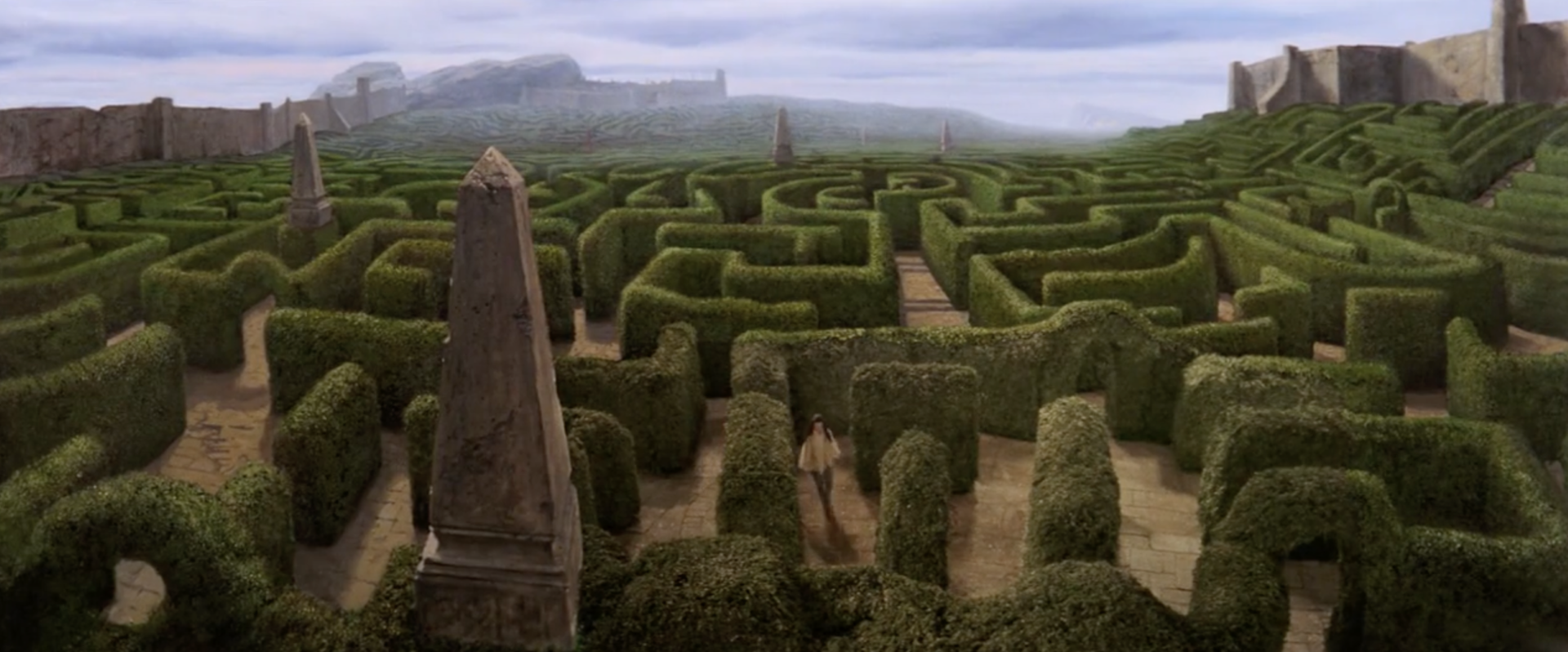
Labyrinth has everything a modern fairy-tale should have… Mayhem, dramatic and comedic, ensuing from the quest for her banished baby brother by recalcitrant teenage heroine Sarah. Muppets as goblins, talking hands, living rocks, wee friendly worms and humongous monsters. Music written and performed by David Bowie, who co-stars as the mad, bad Goblin King. And a mise-en-scène of wonderfully diverse episodic settings, glorious gardens, smelly bogs, dark oubliettes, all spinning off from the labyrinth with Bowie as Jareth at the centre of it all. Drawing upon children’s classics from Carroll, Baum, Sendak, the Grimms, and Andersen, as well as Kabuki, Borges, and Escher, Labyrinth is a complex movie – scripted by Monty Python’s Terry Jones – where things are not always what they seem, fantasy and dream suffusing reason and reality.
Two readings of the film are well-known: a coming-of-age story and a cautionary feminist fable. Yet, it seems to me, there is another, surreptitious but nevertheless complementary approach to Labyrinth. One in which the liberations and liabilities of fantasy and dream are explored through the images of the film. Key to this is the involvement of Bowie, a music artist who played with theatrical personas, concepts, and settings in song and on stage, challenging identity, gender, sexuality, masculinity, and so on, but sometimes suffocating within his masks, getting lost in dark psychological mazes of delusion, paranoia, psychosis… To explore this aspect of Labyrinth, the film-philosophy of Gilles Deleuze will prove inestimable, the explorations of his Cinema books (1983/1985) differentiating and defining dream-image movies where ‘musical comedy gives us in an explicit way so many scenes which work like dreams … as a point of indiscernibility of the real and the imaginary … at once fantasy and report, criticism and compassion’.
David Deamer writes on cinema, culture, and philosophy. He is the author of some essays as well as a couple of books – Deleuze’s Cinema Books: Three Introductions to the Taxonomy of Images and Deleuze, Japanese Cinema and the Atom Bomb. Deamer is an independent scholar, was lecturer in film-philosophy for twenty years at Manchester Metropolitan University, now works at Stepping Hill Hospital, and heads up engagement and events for the British Society for Phenomenology. See daviddeamer.com
21st April
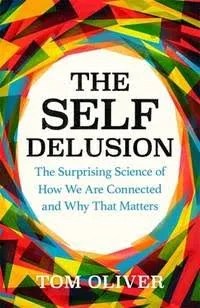
Overcoming the Self Delusion – Why we Need to Fix Ourselves to Fix the World. A Talk by Tom Oliver
We might like to believe that we exist as independent selves at the centre of a subjective universe; that we are discrete individuals acting autonomously in the world with an unchanging inner self that persists throughout our lifetime. This is an illusion.
On a physical, psychological and cultural level, we are all much more intertwined than we know: we cannot use our bodies to define our independent existence because most of our 37 trillion cells have such a short lifespan that we are essentially made anew every few weeks; the molecules that make up our bodies have already been component parts of countless other organisms, from ancient plants to dinosaurs; we are more than half non-human, in the form of bacteria, fungi and viruses, whose genes influence our moods and even manipulate our behaviour; and we cannot define ourselves by our minds, thoughts and actions, because these mainly originate from other people – the result of memes passing between us, existing before, after and beyond our own lifespans.
In this lively talk, Professor of Ecology Tom Oliver makes the compelling argument that although this illusion of individualism has helped us to succeed as a species, tackling the big global challenges ahead now relies on our seeing beyond this mindset and understanding the complex connections between us. This presentation brings to life the overwhelming evidence contradicting the perception we have of ourselves as independent beings – and why understanding this may well be the key to a better future.
Tom Oliver is Professor of Applied Ecology and Associate Pro-Vice-Chancellor for the University of Reading’s for Environment research theme. He regularly advises the UK government and EU Commission on environmental issues, and currently sits on the science council for the Food Standards Agency and the expert college for the Office for Environmental Protection. His writing has appeared in the Guardian, Independent and BBC Science Focus and he regularly gives talks on environmental science to general audiences. His first book, The Self Delusion: The Surprising Science of Our Connection to Each Other and the Natural World, was published in January 2020 and his second book, The Nature Delusion: Why we Can’t Fix the World Without Fixing Ourselves, will be published in March 2026.
6th May
Making Sense of Carl Jung. A Talk by Paul Archer
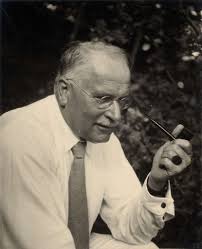
There are many good reasons to be sceptical about the work of Carl Jung. His personal behaviour is poor; his political views are questionable; his scientific thinking can be nonsensical; his therapeutic claims are weak; and his notion of archetypes is sometimes confused. To put it in his own terms, this is the shadow side of Jung. And yet, in spite of all this, he remains one of the most interesting and influential thinkers of our times. The great challenges of his life are about bringing together evolution and the imagination; finding a new non-dogmatic approach to religion; and providing us with a challenging and meaningful ethical framework. There is a lot to be learned from Jung if we can hold on to the scepticism and the wisdom at the same time
Paul Archer is Chair of the Swindon Philosophical Societies, one of the longest standing philosophical societies in the country, meeting every week or so since 1963. He studied philosophy at Southampton University. He finds the philosopher’s fascination with consciousness a bit wearing. He is more interested in the unconscious. When not reading books, he spends much of his time training Citizens Advice throughout England and Wales in Employment Law
2oth May
What’s in a Cultural Counter-Hegemony: Birmingham Literature Festivals, Curation, and Meanings. A Talk by Amélie Doche

In March 2025, I gave a talk entitled ‘What’s in a Cultural Hegemony’ for GPS. This year, I return with the question: ‘What’s in a Counter-Cultural Hegemony? I argue that meaning – rather than pleasure – is the primary value of the literary works that are either published or promoted by organisations funded by the Arts Council. Influenced by the work of psychotherapist Viktor Frankl and philosopher Pascal Chabot, I distinguish three kinds of meanings: teleological, phenomenological and hermeneutical. In this talk, I focus on the circulation of the first two types of meanings – teleological and phenomenological – at the annual Birmingham Literature Festival curated by Writing West Midlands. My presentation is twofold. Firstly, I explore the teleological meaning-making offered both by the festival itself – an event that, as per my ethnographic observations, functions as a kind of epoché – and by the creative non-fiction promoted there. Secondly, I discuss the phenomenological meaning-making arising from the sensuous poetry and nature-writing promoted at the festival.
Amélie Doche is an AHRC-funded doctoral researcher in English language and literature at Birmingham City University. Her PhD – carried out in collaboration with the literature development organisation Writing West Midlands – explores discourses of value in contemporary literary culture. Amélie’s latest publication (co-written with Dr. Kim Pager-McClymont and Dr. Suzanne McClure) Colour Concepts from a Linguistic and Literary Perspective was published by Cambridge University Press in 2026.
All talks will take place 7 pm at the FCH Campus of the University of Gloucestershire in Rm. HC203 except the social discussion, which is at the Everyman Theatre in Cheltenham.
You can find a map of the campus here: https://www.glos.ac.uk/visit-us/our-campuses/francis-close-hall-campus/
Contact email is: glosphilsoc@gmail.com
We are a local partner of the Royal Institute of Philosophy and these events are funded by a grant from them. Their website can be found here: https://royalinstitutephilosophy.org/.





 Gloucestershire Philosophical Society