Winter Programme 2026-7

7th Oct

Should there be any Limits on Free Speech?
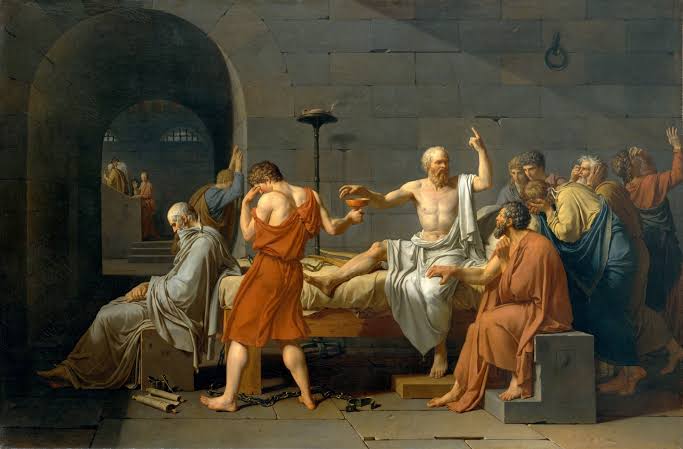
Free speech is more than a legal right. It is the very essence of philosophy and democratic life. Far from being merely the freedom to cause offense, it is a positive, collaborative pursuit of truth. Without open dialogue with others philosophy is not possible. Yet free speech is not an absolute. There must be ethical boundaries. A speech that has no concern for the other can become harmful and violent. How do we create a community where all can speak their opinions freely with others and yet at the same time not cause harm and injury?

Do not however, lose yourself in the abstraction of freedom, in which you merely acknowledge that you are free to accept that only the rich man can speak freely. You are not an object of acceptance. You are a beast of complication, so show some teeth and ask when I am free, will I be the kind to use it to rule and become another monster? Or shall we instead share vulnerability and prove ourselves human?

This is a social and open discussion meeting. It is a nice opportunity to say ‘hello’ after the summer and to meet old and new members..

This meeting will take place in the Director’s Lounge at the Everyman Theatre in Cheltenham starting at 7 pm. Here is their website. https://www.everymantheatre.org.uk/

21st Oct

An Impossible Project

Thinking through the meaning of impossibility in the work of Maurice Blanchot. A Talk by Adam Potts
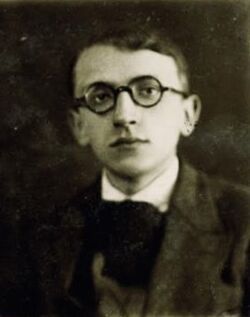
Maurice Blanchot remains one of the most compelling and enigmatic thinkers of the twentieth century. He writes philosophy, and about philosophy, but often this is done through the lens of literature. At the heart of Blanchot’s project is a thinking of the limit; Blanchot is interested in the way certain kinds of literature push thought to its limits via the limits of language.

If Blanchot’s work is a philosophy of anything, it is a philosophy of language and the ways in which different kinds of language offer different relations with the world. Whereas everyday language seeks to represent the world and philosophical language often seeks to secure meaning, literary language can subvert these responsibilities. In its most radical forms, literature can refuse representation, complicate identity and subjectivity, and even unsettle the self-identical nature of words themselves. Blanchot is interested in this capacity in literature – its ability to open a chasm within the “known” world and create an “atmosphere of uncertainty” (Blanchot, 1985,52). This uncertainty brings us to the limit of possibility and, ultimately, to the idea of impossibility.

Yet this uncertainty is not an invitation to despair or nihilism. Although Blanchot frequently circles negative themes like death, dying, and solitude, by The Infinite Conversation (1969) this uncertain region acquires a distinctly political dimension. This is where he explains how the “impossible” is ultimately “not there in order to make thought capitulate, but in order to allow it to announce itself according to a measure other than that of power” (Blanchot, 1969, 43). Literary language thus becomes a means of resisting the world and opening alternative relations with it.

The talk will follow this trajectory, introducing key themes in Blanchot’s work while offering an interpretation of it as a project driven by the pursuit of impossibility.

Dr Adam Potts is Senior Lecturer in Philosophy at Newcastle University, UK. He specialises in the philosophy of Maurice Blanchot and Georges Bataille, as well as aesthetics, specifically the philosophy of music, sound, and noise. His most recent book, Maurice Blanchot and the Aesthetics of Hope and Chance, explores the notions of hope and chance in Blanchot’s writing, while considering how his understanding of these concepts can illuminate their treatment by other thinkers. This puts Blanchot in contact with thinkers such as Yves Bonnefoy, Ernst Bloch, and Gabriel Marcel, as well as with the aesthetics of Dada and Surrealism, and the work of John Cage, improvised music, and dance.

11th Nov

The Gaza Catastrophe: The Genocide in World-Historical Perspective. A Talk by Gilbert Achcar

The genocidal war waged by Israel’s armed forces on Gaza was not an accidental vengeful overreaction to the reckless Hamas-led attack on 7 October 2023. It was rather the culmination of a pattern of increasingly “disproportionate” retaliation that has been going along with Israel’s decades-long right-wing drift. The new catastrophe that has befallen the Palestinian people is far worse than the 1948 Nakba in lethality and destructiveness. It also bears a tremendous world-historical significance as first openly intentional genocidal war waged by an industrially advanced state since 1945 – moreover, with full U.S. participation and open support from the geopolitical West. The Gaza genocide has thus irredeemably exposed the double standard intrinsic to the Atlanticist pretence of a liberal rules-based international order.

Gilbert Achcar is Emeritus Professor of Development Studies and International Relations at SOAS, University of London. He grew up in Lebanon and has worked as researcher / teacher in Beirut, Paris and Berlin before moving to London in 2007. He is the author of several books published in several languages, including The Arabs and the Holocaust (2010); The People Want: A Radical Exploration of the Arab Uprising (2013); The New Cold War: The United States, Russia and China, from Kosovo to Ukraine (2023); and most recently, The Gaza Catastrophe: The Genocide in World-Historical Perspective (2025). His website is at https://gilbert-achcar.net/

20th Nov

The Evolving Definition of Work in an Era of Automation. A Talk by Ian MacRae

AI is a tool that many people have found remarkably useful, but the rapid adoption of language models is challenging our view of work and unique human capabilities.

Human capabilities are defined as much by our limitations as our strengths, but in understanding how our unique biological, cognitive and physical limitations force us to focus, narrow attention, prioritize time, resources and relationships in fundamentally different ways than computers operate.

Understanding the uniqueness of human psychology is essential to understanding what constitutes good work, and what should be prioritized as human work. Psychological , frameworks like Self-Determination Theory highlight that human motivation relies on autonomy, competence, and relatedness. 

To better understand the current areas of psychological thinking that might maintain relevance into the future of advancing automation tech, it is also useful to look back for common threads with earlier critiques of automation. John Ruskin’s work on defining the concept of good work during the 19th-century was developed during an early wave of automation. In The Stones of Venice, Ruskin observed that cathedral stonemasons, despite not designing the overarching structures, exercised essential autonomy in their immediate tasks. Their individual creativity was evident in the rough edges, unique carvings, and imperfections that gave the structures lasting depth and beauty. The work was meaningful because it expressed agency and creativity at every scale, from individual carvings to the view of the whole cathedral. Meaningful work ultimately demands that individual human effort and creativity remain visible in the final results at every level.

Ian is a work psychologist whose research and writing focus on the relationship between people and the changing nature of work in an age of emerging technology.  He is an award-winning author of books on workplace psychology and technology, including High Potential, Motivation and Performance, Dark Social, Myths of Social Media, Myths of Work and Web of Value, and have been published in a dozen languages.

His work explores how technology affects people, how people shape (and are shaped by) digital spaces, and the impact of technology on human communication, cognition and behaviour.

Ian currently serves on the British Psychological Society’s Division of Occupational Psychology committee and Research Board.

Ian is director of High Potential Psychology, founded in 2014 to conduct psychological research and develop workplace psychometric assessments, test developed by Ian have been completed over one million times.

2nd December

Max Weber and the Tragedy of Modernity. A Talk by Rhodri Lathey
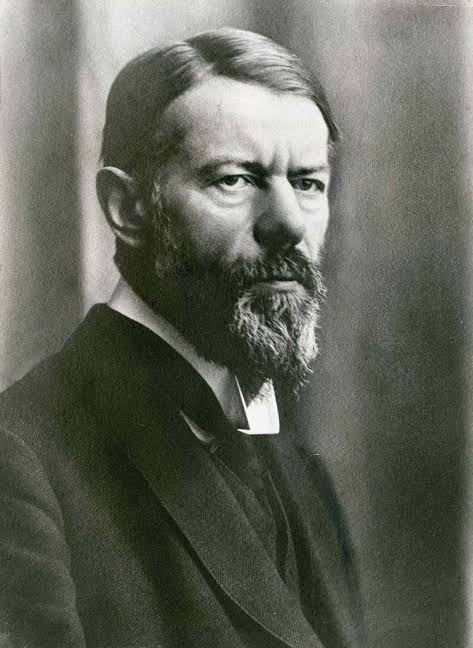
Why has the modern West become so extraordinarily powerful, yet so uncertain about what human life is ultimately for? This talk explores Max Weber’s theory of modernity as a genealogy of Western civilisation: from the religious struggle to make suffering and injustice meaningful, through rationalisation, Calvinism and the rise of scientific and bureaucratic mastery, to the disenchantment of the modern world. It culminates in Weber’s tragedy of modernity: a civilisation increasingly capable of controlling the world, but without any universally authoritative answer to the question of what we should ultimately do with that power—or how we should live.

Rhodri Lathey has a joint honours degree in politics and philosophy from the University of Durham, and a graduate degree from the Politics Department in the University of Oxford. It’s at Oxford where, over 25 years ago, he came across Weber. He left academia shortly afterwards!

16th December

The Death Penalty. A Debate led by Paul Bridges

Humanity has employed the death penalty since the dawn of civilisation and throughout that period it has been used as a tool of punishment, retribution, deterrence, oppression and terror.   So given its long history it is quite remarkable that the abolition movement only got going just over 150 years ago and that in that period over two-thirds of countries worldwide have completely abolished it and many others have abolished it in practice. 

Despite this many people still support the death penalty, would like to see it restored where it has been abolished and some would even like to see its use extended to crimes other than certain classes of murder and they will cite a number of reasons for their stance.

Those on the abolitionist side of the debate tend to see the death penalty as barbaric, immoral, ineffective and fraught with danger.  Where do you sit?

In our session we will look at:

  • Arguments for the death penalty
  • Arguments against
  • The status of the death penalty around the world including where it is used, for what crimes and the methods employed. 

As well being a member and Treasurer of GPS, Paul Bridges is Chair of Amnesty International’s UK Anti-Death Penalty campaign group.  He has spoken to many groups, schools and universities on the subject and, given that Amnesty opposes the death penalty in all circumstances, you will understand where Paul sits in this debate

All talks will take place 7 pm at the FCH Campus of the University of Gloucestershire in Rm. HC203. The social discussion, is at the Everyman Theatre in Cheltenham. You find directions to the theatre at this link https://www.everymantheatre.org.uk/visit/. Professor’s Achcar’s talk will be online only. If you wish to attend this talk, and you are not an existing member, then please contact the email below.

You can find a map of the campus here: https://www.glos.ac.uk/visit-us/our-campuses/francis-close-hall-campus/

Contact email is: glosphilsoc@gmail.com

We are a local partner of the Royal Institute of Philosophy and these events are funded by a grant from them. Their website can be found here: https://royalinstitutephilosophy.org/.
Spring Programme 2026

11th February

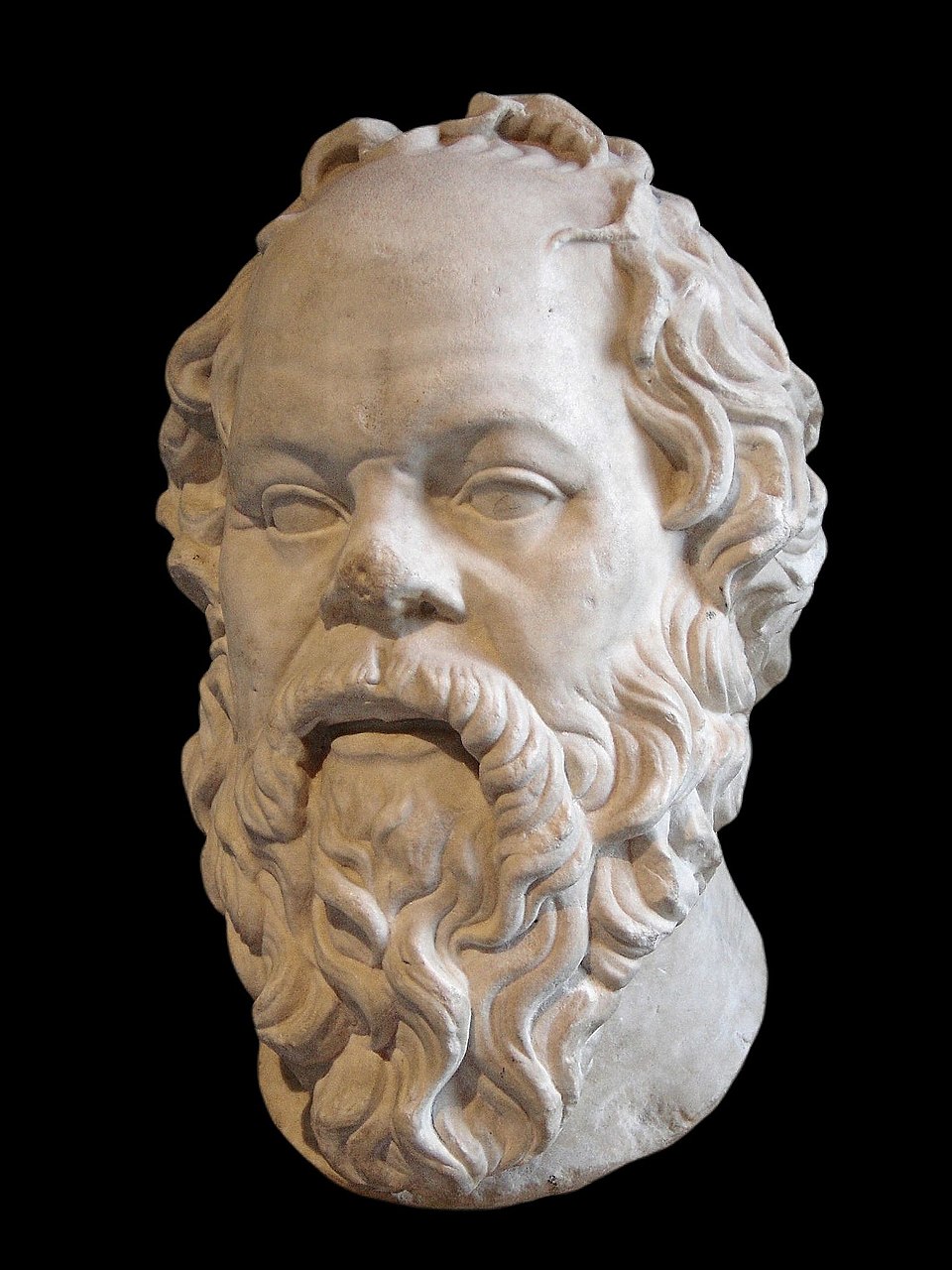
Values – what would you live or die for?

n 399 BCE, a man stood before a jury of 500 fellow citizens and told them they were living their lives backward.

Socrates didn’t mince his words. He accused the Athenians of being obsessed with wealth, reputation, and status, while their true selves lay neglected. He famously argued that the unexamined life is not worth living. He was willing to sacrifice himself for the truth he believed in rather than turning his back on his values to save himself.

We live in a world that Socrates would find familiar. We are constantly pressured to value what is visible, measurable, and profitable. But if everything was stripped away, what would remain?

The question for our first meetup is simple but perhaps the most important philosophical one of them all:

  • What are the values you are currently living for?
  • More importantly, is there anything you would be willing to die for?

25th February


The History and Future of the BBC. A Discussion with Tom Mills

The BBC is one of the most important institutions in the UK; it is also one of the most misunderstood. Despite its claim to be independent and impartial, and the constant accusations of a liberal bias, the BBC has always sided with the elite. Today its operations have been thoroughly commercialised and its management politicised, and it remains largely unaccountable to the public it claims to serve. In recent years it has lurched from one political crisis to another, and neither its leadership, nor the politicians to whom it is ultimately answerable, seem able to articulate a coherent vision for public media in the digital age. What lies behind the failure of the BBC to live up to its promise of independent and impartial journalism? And can this imperial-era broadcaster be transformed into a digital media operation directly accountable to its audiences?

Dr Tom Mills is Senior Lecturer in Sociology at Aston University. His academic work combines media and communication and the sociology of elites. Both are concerned with examining powerful organisations and networks and their impact on democracy. He is a former chair of the Media Reform Coalition and is the author of The BBC: Myth of a Public Service, a book which examines the BBC’s relationship with the state and the ways in which the rise of neoliberalism impacted on its organisational structure and culture. 

11th March

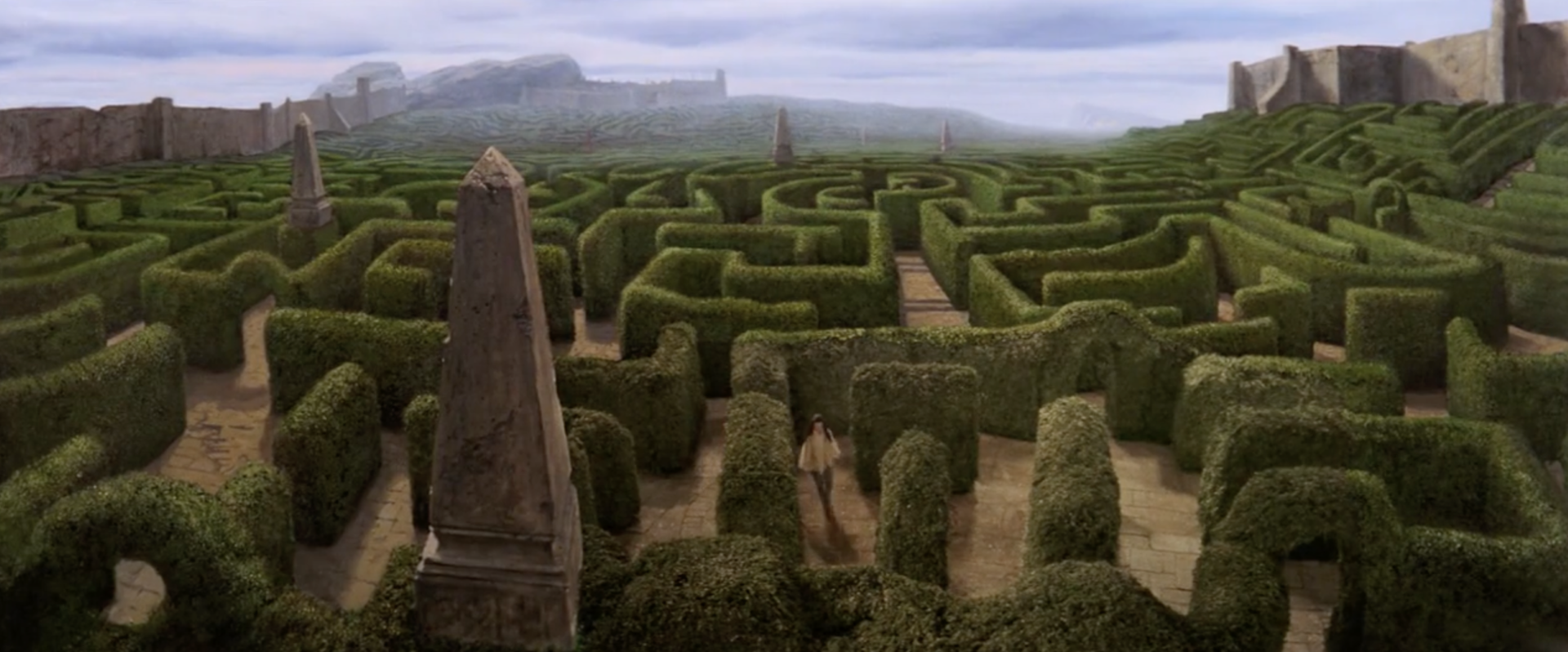
The Labyrinth Solution: the world of David Bowie & the film-philosophy of Gilles Deleuze. A Talk by David Deamer

Labyrinth has everything a modern fairy-tale should have… Mayhem, dramatic and comedic, ensuing from the quest for her banished baby brother by recalcitrant teenage heroine Sarah. Muppets as goblins, talking hands, living rocks, wee friendly worms and humongous monsters. Music written and performed by David Bowie, who co-stars as the mad, bad Goblin King. And a mise-en-scène of wonderfully diverse episodic settings, glorious gardens, smelly bogs, dark oubliettes, all spinning off from the labyrinth with Bowie as Jareth at the centre of it all. Drawing upon children’s classics from Carroll, Baum, Sendak, the Grimms, and Andersen, as well as Kabuki, Borges, and Escher, Labyrinth is a complex movie – scripted by Monty Python’s Terry Jones – where things are not always what they seem, fantasy and dream suffusing reason and reality.

Two readings of the film are well-known: a coming-of-age story and a cautionary feminist fable. Yet, it seems to me, there is another, surreptitious but nevertheless complementary approach to Labyrinth. One in which the liberations and liabilities of fantasy and dream are explored through the images of the film. Key to this is the involvement of Bowie, a music artist who played with theatrical personas, concepts, and settings in song and on stage, challenging identity, gender, sexuality, masculinity, and so on, but sometimes suffocating within his masks, getting lost in dark psychological mazes of delusion, paranoia, psychosis… To explore this aspect of Labyrinth, the film-philosophy of Gilles Deleuze will prove inestimable, the explorations of his Cinema books (1983/1985) differentiating and defining dream-image movies where ‘musical comedy gives us in an explicit way so many scenes which work like dreams … as a point of indiscernibility of the real and the imaginary … at once fantasy and report, criticism and compassion’.

David Deamer writes on cinema, culture, and philosophy. He is the author of some essays as well as a couple of books – Deleuze’s Cinema Books: Three Introductions to the Taxonomy of Images and Deleuze, Japanese Cinema and the Atom Bomb. Deamer is an independent scholar, was lecturer in film-philosophy for twenty years at Manchester Metropolitan University, now works at Stepping Hill Hospital, and heads up engagement and events for the British Society for Phenomenology. See daviddeamer.com

21st April

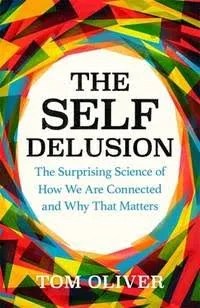
Overcoming the Self Delusion – Why we Need to Fix Ourselves to Fix the World. A Talk by Tom Oliver

We might like to believe that we exist as independent selves at the centre of a subjective universe; that we are discrete individuals acting autonomously in the world with an unchanging inner self that persists throughout our lifetime. This is an illusion.

On a physical, psychological and cultural level, we are all much more intertwined than we know: we cannot use our bodies to define our independent existence because most of our 37 trillion cells have such a short lifespan that we are essentially made anew every few weeks; the molecules that make up our bodies have already been component parts of countless other organisms, from ancient plants to dinosaurs; we are more than half non-human, in the form of bacteria, fungi and viruses, whose genes influence our moods and even manipulate our behaviour; and we cannot define ourselves by our minds, thoughts and actions, because these mainly originate from other people – the result of memes passing between us, existing before, after and beyond our own lifespans.

In this lively talk, Professor of Ecology Tom Oliver makes the compelling argument that although this illusion of individualism has helped us to succeed as a species, tackling the big global challenges ahead now relies on our seeing beyond this mindset and understanding the complex connections between us. This presentation brings to life the overwhelming evidence contradicting the perception we have of ourselves as independent beings – and why understanding this may well be the key to a better future.

Tom Oliver is Professor of Applied Ecology and Associate Pro-Vice-Chancellor for the University of Reading’s for Environment research theme. He regularly advises the UK government and EU Commission on environmental issues, and currently sits on the science council for the Food Standards Agency and the expert college for the Office for Environmental Protection. His writing has appeared in the Guardian, Independent and BBC Science Focus and he regularly gives talks on environmental science to general audiences. His first book, The Self Delusion: The Surprising Science of Our Connection to Each Other and the Natural World, was published in January 2020 and his second book, The Nature Delusion: Why we Can’t Fix the World Without Fixing Ourselves, will be published in March 2026.

6th May

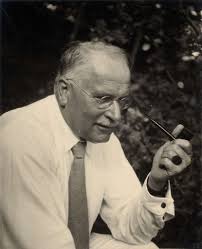
Making Sense of Carl Jung. A Talk by Paul Archer

There are many good reasons to be sceptical about the work of Carl Jung.  His personal behaviour is poor; his political views are questionable; his scientific thinking can be nonsensical; his therapeutic claims are weak; and his notion of archetypes is sometimes confused.  To put it in his own terms, this is the shadow side of Jung.  And yet, in spite of all this, he remains one of the most interesting and influential thinkers of our times.  The great challenges of his life are about bringing together evolution and the imagination; finding a new non-dogmatic approach to religion; and providing us with a challenging and meaningful ethical framework.  There is a lot to be learned from Jung if we can hold on to the scepticism and the wisdom at the same time

Paul Archer is Chair of the Swindon Philosophical Societies, one of the longest standing philosophical societies in the country, meeting every week or so since 1963.  He studied philosophy at Southampton University.  He finds the philosopher’s fascination with consciousness a bit wearing.  He is more interested in the unconscious.  When not reading books, he spends much of his time training Citizens Advice throughout England and Wales in Employment Law

2oth May

Against Distance: Quantum Thinking in Humanities Research. A Talk by Amélie Doche

Why should we care about quantum physics? After all, it only pertains to the micro world… Right? But what about the hypothesis of large-scale quantum activity in the brain? And what about nuclear power, black holes, and laser beams? My talk, anchored in so-called ‘quantum social science’, defends the idea that quantum physics matters to us – as humanities scholars, curious human beings, but also as people entangled in various professional and personal relationships. Traditional humanities research unconsciously embraces a classical (i.e., Newtonian) worldview whereby things are ‘fixed’ and ‘observable’ from the outside. Distance is the pre-requisite of objectivity – but, when I think of my research, is it not already part of me?

The two-slit experiment teaches us that, if the physicist measures the behaviour of light using a particle detector, they will find a particle. However, if the physicist measures the behaviour of light using a screen, they will find a wave pattern (also known as ‘diffraction’ or ‘interference pattern’). In other words, to observe is to intervene. I discuss the epistemological, ontological, and ethical implications of the two-slit experiment and, in so doing, answer Carlo Rovelli, Karen Barad, and Danah Zohar’s call to ground our philosophies in science (and not the other way around). This argument might seem questionable if the science we have in mind is one that separates us from Nature, Ideas, and Others. In a quantum paradigm, however, everything is connected to everything else. Using Rovelli’s Relational Quantum Mechanics (RQM) and Barad’s Agential Realism, I show that quantum-informed enquiries hold the potential not only to bring us closer to our humanness, but also to bring us closer to ‘truth’ and ‘objectivity’.

Amélie Doche is an AHRC-funded doctoral researcher in English language and literature at Birmingham City University. Her PhD – carried out in collaboration with the literature development organisation Writing West Midlands – explores discourses of value in contemporary literary culture. Amélie’s latest publication (co-written with Dr. Kim Pager-McClymont and Dr. Suzanne McClure) Colour Concepts from a Linguistic and Literary Perspective was published by Cambridge University Press in 2026.

All talks will take place 7 pm at the FCH Campus of the University of Gloucestershire in Rm. HC203 except the social discussion, which is at the Everyman Theatre in Cheltenham.

You can find a map of the campus here: https://www.glos.ac.uk/visit-us/our-campuses/francis-close-hall-campus/

Contact email is: glosphilsoc@gmail.com

We are a local partner of the Royal Institute of Philosophy and these events are funded by a grant from them. Their website can be found here: https://royalinstitutephilosophy.org/.