
1st October
Do We Need Billionaires?
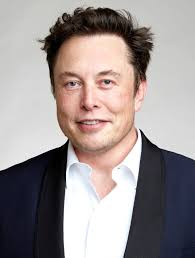
Are billionaires the deserved winners of a meritocratic system, or a symptom of a broken social contract? This discussion delves into the profound ethical and political tensions at the heart of extreme wealth. Does the concentration of vast resources in private hands represent a just reward for innovation, or an unjust inequality that undermines the very idea of a common good? We will question whether such fortunes are compatible with democratic principles, or if they inevitably translate into undue political power. Join us to debate if the billionaire is an engine of progress we cannot live without, or a philosophical problem we can no longer ignore.
15th October
A Social History of Analytic Philosophy: A Discussion with Dr Christoph Schuringa
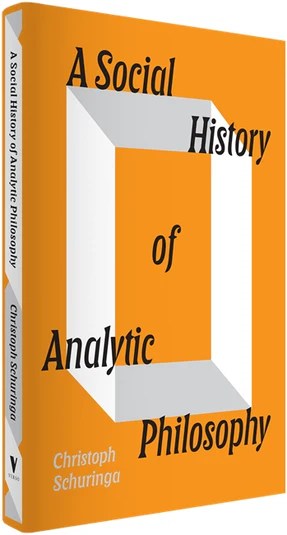
Analytic philosophy is the leading form of philosophy in the English-speaking world. What explains its continued success? Christoph Schuringa argues that its enduring power can only be understood by examining its social history. Analytic philosophy tends to think of itself as concerned with eternal questions, transcending the changing scenes of history. It thinks of itself as apolitical. This book, however, convincingly shows that the opposite is true.
The origins of analytic philosophy are in a set of distinct movements, shaped by high-ly specific sets of political and social forces. Only after the Second World War were these disparate, often dynamic movements joined together to make ‘analytic philosophy’ as we know it. In the climate of McCarthyism, analytic philosophy was robbed of political force.
To this day, analytic philosophy is the ideology of the status quo. It may seem arcane and largely removed from the real world, but it is a crucial component in upholding liberalism, through its central role in elite educational institutions. As Schuringa concludes, the apparently increasing friendliness of analytic philosophers to rival approaches in philosophy should be understood as a form of colonization; thanks to its hegemonic status, it reformats all it touches in service of its own imperatives, going so far as to colonize decolonial efforts in the discipline.
Christoph Schuringa studied philosophy at King’s College, Cambridge and Birkbeck College, University of London. He has published widely on the history of philosophy and on Marx and Marxism, and is associate professor of philosophy at Northeastern University, London. His writing has appeared in Jacobin, New Left Review, European Journal of Philosophy and elsewhere.
29th Oct
What is a society without a state? Gilles Deleuze and Félix Guattari on social organisation. A Talk by Prof. Henry Somers-Hall

It is a common starting point when looking at societies to see them in terms of power – the more a society is able to marshal its resources, the more advanced the organisation of that society. In this talk, I want to explore the implications of this assumption for how we conceive of society. I also want to set out the argument by the French philosophers Gilles Deleuze and Félix Guattari for the claim that power, at least in the way we have traditionally understood it, is not central to social organisation, showing some of the possibilities that open up once we reject this assumption.
Henry Somers-Hall is a professor of philosophy at Royal Holloway, University of London. His work focuses on the interplay between 19th century German idealism and the 20th century French philosophical tradition. His most recent books are Judgement and Sense in Modern French Philosophy (Cambridge University Press: 2022), The Deleuzian Mind (co-edited with Jeffrey Bell, Routledge: 2025)), and Reading A Thousand Plateaus: Adventures in Nomad Thought (forthcoming Edinburgh University Press, 2026).
12th Nov
The Meaning of Scholasticide: Colonial Strategies and Palestinian Resistance. A talk by Dr. Nadia Naser-Najjab

Most Palestinians involved in the education system face challenges of considerable scope and intensity. These obstacles have significant impact on educational development, attendance and learning outcomes. Israel’s relentless efforts to destroy Palestinian education fall under the range of actions prohibited by the Genocide Convention, and more specifically ‘scholasticide’. However, Israeli colonial strategies to constrain and limit the development of the Palestinian education substantially predate the ongoing war, and indeed contemporary wars, in the Gaza Strip, being concretely embodied by Israeli practices across historical Palestine. I will demonstrate this by considering Palestinian in broad perspective and over a long period of time, albeit with particular emphasis on Israel’s targeting of the Palestinian higher education system. In doing so, it will refer to the categorisation of Palestinians and the fragmentation of the land to enable Israel control Palestinian education, censor their narrative and scrutinise students and teachers. I will also show how Palestinians, despite the hardship, do not lose hope, remain resilient and never give up.
Dr. Nadia Naser-Najjab is Senior lecturer in Palestine Studies, European Centre for Palestine Studies- Institute of Arab and Islamic Studies, University of Exeter. Prior to this, she was an Assistant Professor, Birzeit University, Department of Philosophy and Cultural Studies and the MA program in Arab Contemporary Studies. Nadia holds a PhD in Middle East Studies form the University of Exeter.
Her most recent book is Covid-19 in Palestine: The Settler Colonial Context, Bloomsbury Publishing 2024.
She also published Dialogue in Palestine: The People-to-People Diplomacy Programme and the Israeli-Palestinian Conflict (Bloomsbury Publishing, 2020)
Her research is based on first-hand experience and original data collection.
26th Nov
The ideology of economic growth, and its philosophical construction. A talk by Dr Gareth Dale

The ‘growth paradigm’ — i.e. the postulate that economic growth is good, imperative, essentially continuous (even limitless), and the principal remedy for a litany of social problems — is ubiquitous today. For all their differences, Liz Truss and Keir Starmer shared the (specifically triplicate) mantra: ‘growth growth growth.’ Yet in historical terms the domination of growth ideology is recent. The growth paradigm is unique to modernity. This paper will briefly touch upon what is involved in the suggestion that economic growth be understood as ideology, before, in its main part, turning to examine the seventeenth-century emergence and consolidation of growth ideology, paying particular attention to philosophers and economic thinkers. In concluding, the question of ‘degrowth’ will be broached.
Gareth is Associate Head of the Department of Social and Political Sciences. He worked at Birkbeck, the LSE, and Swansea University before joining Brunel University in 2005. His most recent books are the edited collections Revolutionary Rehearsals in the Neoliberal Age (Haymarket 2021) and Exploring the Thought of Karl Polanyi (Agenda 2019). In 2016 he published Karl Polanyi: A Life on the Left (Columbia UP) and Reconstructing Karl Polanyi: Excavation and Critique (Pluto), and Karl Polanyi: The Hungarian Writings (Manchester UP), and a critical appraisal of ‘Green Growth’ strategies (Zed Books), and The Politics of East European Area Studies (co-edited; Routledge). His earlier books were on Karl Polanyi (Polity, 2010), the political economy of Eastern Europe (Pluto), migrant labour in the European Union (Berg), and a trilogy on East Germany: its economic history, protest movements, and 1989 revolution (Peter Lang, Routledge, and Manchester UP).
10th Dec
Mattering, Sincerity and Trustworthiness. A talk by Prof. Philip Goodchild

For a philosopher, much contemporary communication lacks substance: it directs attention to that which does not matter, its concerns are often insincere, and its claims are untrustworthy. So what is substance? Instead of evaluating things by their price, their impact, their likes, or their fulfilment of arbitrary objectives, it is possible instead to take a philosophical orientation from these problems: what really matters, what is truly sincere, and what is ultimately trustworthy?
These are not simply problems we can formulate ourselves. They happen to us in any crisis which provokes thought; they are a reason for thinking. This talk will explore what might be meant by the mattering, sincerity, and trustworthiness of things themselves by describing how such problems arise in contemporary life.
Philip Goodchild is Professor of Religion and Philosophy at the University of Nottingham. He is the author of several books, including Theology of Money (2007), the Credit and Faith trilogy (2020-21), and Rethinking the Existence of God: Renewing Metaphysics after the Critical Turn (forthcoming) – the Appendix forming the basis for this talk.
All talks will take place at the FCH Campus of the University of Gloucestershire in Rm. HC203 except the social discussion, which is at the Everyman Theatre in Cheltenham.
You can find a map of the campus here: https://www.glos.ac.uk/visit-us/our-campuses/francis-close-hall-campus/
Contact email is: glosphilsoc@gmail.com
We are a local partner of the Royal Institute of Philosophy and these events are funded by a grant from them. Their website can be found here: https://royalinstitutephilosophy.org/.


 Gloucestershire Philosophical Society