7th Oct
Should there be any Limits on Free Speech?
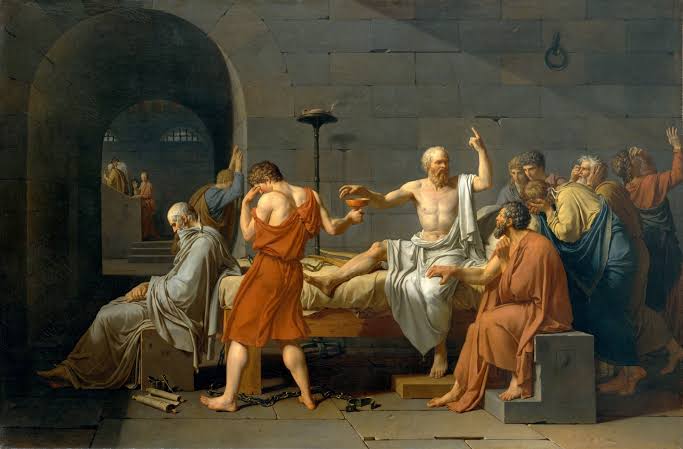
Free speech is more than a legal right. It is the very essence of philosophy and democratic life. Far from being merely the freedom to cause offense, it is a positive, collaborative pursuit of truth. Without open dialogue with others philosophy is not possible. Yet free speech is not an absolute. There must be ethical boundaries. A speech that has no concern for the other can become harmful and violent. How do we create a community where all can speak their opinions freely with others and yet at the same time not cause harm and injury?
Do not however, lose yourself in the abstraction of freedom, in which you merely acknowledge that you are free to accept that only the rich man can speak freely. You are not an object of acceptance. You are a beast of complication, so show some teeth and ask when I am free, will I be the kind to use it to rule and become another monster? Or shall we instead share vulnerability and prove ourselves human?
This is a social and open discussion meeting. It is a nice opportunity to say ‘hello’ after the summer and to meet old and new members..
This meeting will take place in the Director’s Lounge at the Everyman Theatre in Cheltenham starting at 7 pm. Here is their website. https://www.everymantheatre.org.uk/
21st Oct
An Impossible Project
Thinking through the meaning of impossibility in the work of Maurice Blanchot. A Talk by Adam Potts
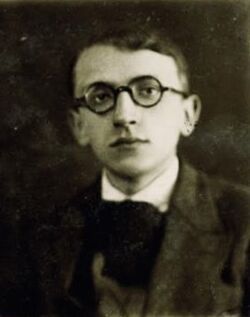
Maurice Blanchot remains one of the most compelling and enigmatic thinkers of the twentieth century. He writes philosophy, and about philosophy, but often this is done through the lens of literature. At the heart of Blanchot’s project is a thinking of the limit; Blanchot is interested in the way certain kinds of literature push thought to its limits via the limits of language.
If Blanchot’s work is a philosophy of anything, it is a philosophy of language and the ways in which different kinds of language offer different relations with the world. Whereas everyday language seeks to represent the world and philosophical language often seeks to secure meaning, literary language can subvert these responsibilities. In its most radical forms, literature can refuse representation, complicate identity and subjectivity, and even unsettle the self-identical nature of words themselves. Blanchot is interested in this capacity in literature – its ability to open a chasm within the “known” world and create an “atmosphere of uncertainty” (Blanchot, 1985,52). This uncertainty brings us to the limit of possibility and, ultimately, to the idea of impossibility.
Yet this uncertainty is not an invitation to despair or nihilism. Although Blanchot frequently circles negative themes like death, dying, and solitude, by The Infinite Conversation (1969) this uncertain region acquires a distinctly political dimension. This is where he explains how the “impossible” is ultimately “not there in order to make thought capitulate, but in order to allow it to announce itself according to a measure other than that of power” (Blanchot, 1969, 43). Literary language thus becomes a means of resisting the world and opening alternative relations with it.
The talk will follow this trajectory, introducing key themes in Blanchot’s work while offering an interpretation of it as a project driven by the pursuit of impossibility.
Dr Adam Potts is Senior Lecturer in Philosophy at Newcastle University, UK. He specialises in the philosophy of Maurice Blanchot and Georges Bataille, as well as aesthetics, specifically the philosophy of music, sound, and noise. His most recent book, Maurice Blanchot and the Aesthetics of Hope and Chance, explores the notions of hope and chance in Blanchot’s writing, while considering how his understanding of these concepts can illuminate their treatment by other thinkers. This puts Blanchot in contact with thinkers such as Yves Bonnefoy, Ernst Bloch, and Gabriel Marcel, as well as with the aesthetics of Dada and Surrealism, and the work of John Cage, improvised music, and dance.
11th Nov
The Gaza Catastrophe: The Genocide in World-Historical Perspective. A Talk by Gilbert Achcar
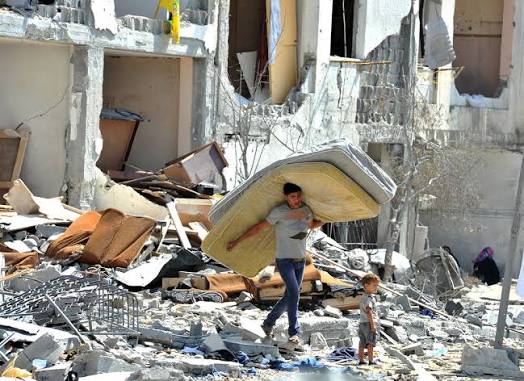
The genocidal war waged by Israel’s armed forces on Gaza was not an accidental vengeful overreaction to the reckless Hamas-led attack on 7 October 2023. It was rather the culmination of a pattern of increasingly “disproportionate” retaliation that has been going along with Israel’s decades-long right-wing drift. The new catastrophe that has befallen the Palestinian people is far worse than the 1948 Nakba in lethality and destructiveness. It also bears a tremendous world-historical significance as first openly intentional genocidal war waged by an industrially advanced state since 1945 – moreover, with full U.S. participation and open support from the geopolitical West. The Gaza genocide has thus irredeemably exposed the double standard intrinsic to the Atlanticist pretence of a liberal rules-based international order.
Gilbert Achcar is Emeritus Professor of Development Studies and International Relations at SOAS, University of London. He grew up in Lebanon and has worked as researcher / teacher in Beirut, Paris and Berlin before moving to London in 2007. He is the author of several books published in several languages, including The Arabs and the Holocaust (2010); The People Want: A Radical Exploration of the Arab Uprising (2013); The New Cold War: The United States, Russia and China, from Kosovo to Ukraine (2023); and most recently, The Gaza Catastrophe: The Genocide in World-Historical Perspective (2025). His website is at https://gilbert-achcar.net/
20th Nov
The Evolving Definition of Work in an Era of Automation. A Talk by Ian MacRae

AI is a tool that many people have found remarkably useful, but the rapid adoption of language models is challenging our view of work and unique human capabilities.
Human capabilities are defined as much by our limitations as our strengths, but in understanding how our unique biological, cognitive and physical limitations force us to focus, narrow attention, prioritize time, resources and relationships in fundamentally different ways than computers operate.
Understanding the uniqueness of human psychology is essential to understanding what constitutes good work, and what should be prioritized as human work. Psychological , frameworks like Self-Determination Theory highlight that human motivation relies on autonomy, competence, and relatedness.
To better understand the current areas of psychological thinking that might maintain relevance into the future of advancing automation tech, it is also useful to look back for common threads with earlier critiques of automation. John Ruskin’s work on defining the concept of good work during the 19th-century was developed during an early wave of automation. In The Stones of Venice, Ruskin observed that cathedral stonemasons, despite not designing the overarching structures, exercised essential autonomy in their immediate tasks. Their individual creativity was evident in the rough edges, unique carvings, and imperfections that gave the structures lasting depth and beauty. The work was meaningful because it expressed agency and creativity at every scale, from individual carvings to the view of the whole cathedral. Meaningful work ultimately demands that individual human effort and creativity remain visible in the final results at every level.
Ian is a work psychologist whose research and writing focus on the relationship between people and the changing nature of work in an age of emerging technology. He is an award-winning author of books on workplace psychology and technology, including High Potential, Motivation and Performance, Dark Social, Myths of Social Media, Myths of Work and Web of Value, and have been published in a dozen languages.
His work explores how technology affects people, how people shape (and are shaped by) digital spaces, and the impact of technology on human communication, cognition and behaviour.
Ian currently serves on the British Psychological Society’s Division of Occupational Psychology committee and Research Board.
Ian is director of High Potential Psychology, founded in 2014 to conduct psychological research and develop workplace psychometric assessments, test developed by Ian have been completed over one million times.
2nd December
Max Weber and the Tragedy of Modernity. A Talk by Rhodri Lathey
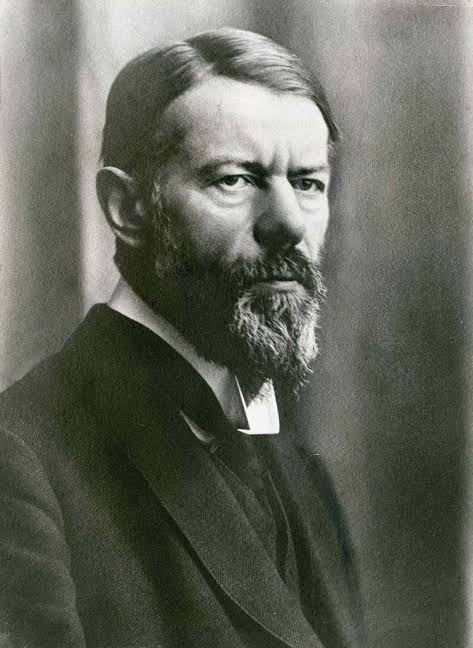
Why has the modern West become so extraordinarily powerful, yet so uncertain about what human life is ultimately for? This talk explores Max Weber’s theory of modernity as a genealogy of Western civilisation: from the religious struggle to make suffering and injustice meaningful, through rationalisation, Calvinism and the rise of scientific and bureaucratic mastery, to the disenchantment of the modern world. It culminates in Weber’s tragedy of modernity: a civilisation increasingly capable of controlling the world, but without any universally authoritative answer to the question of what we should ultimately do with that power—or how we should live.
Rhodri Lathey has a joint honours degree in politics and philosophy from the University of Durham, and a graduate degree from the Politics Department in the University of Oxford. It’s at Oxford where, over 25 years ago, he came across Weber. He left academia shortly afterwards!
16th December
The Death Penalty. A Debate led by Paul Bridges

Humanity has employed the death penalty since the dawn of civilisation and throughout that period it has been used as a tool of punishment, retribution, deterrence, oppression and terror. So given its long history it is quite remarkable that the abolition movement only got going just over 150 years ago and that in that period over two-thirds of countries worldwide have completely abolished it and many others have abolished it in practice.
Despite this many people still support the death penalty, would like to see it restored where it has been abolished and some would even like to see its use extended to crimes other than certain classes of murder and they will cite a number of reasons for their stance.
Those on the abolitionist side of the debate tend to see the death penalty as barbaric, immoral, ineffective and fraught with danger. Where do you sit?
In our session we will look at:
- Arguments for the death penalty
- Arguments against
- The status of the death penalty around the world including where it is used, for what crimes and the methods employed.
As well being a member and Treasurer of GPS, Paul Bridges is Chair of Amnesty International’s UK Anti-Death Penalty campaign group. He has spoken to many groups, schools and universities on the subject and, given that Amnesty opposes the death penalty in all circumstances, you will understand where Paul sits in this debate
All talks will take place 7 pm at the FCH Campus of the University of Gloucestershire in Rm. HC203. The social discussion, is at the Everyman Theatre in Cheltenham. You find directions to the theatre at this link https://www.everymantheatre.org.uk/visit/. Professor’s Achcar’s talk will be online only. If you wish to attend this talk, and you are not an existing member, then please contact the email below.
You can find a map of the campus here: https://www.glos.ac.uk/visit-us/our-campuses/francis-close-hall-campus/
Contact email is: glosphilsoc@gmail.com
We are a local partner of the Royal Institute of Philosophy and these events are funded by a grant from them. Their website can be found here: https://royalinstitutephilosophy.org/.