Autumn Programme 2025

1st October

Do We Need Billionaires?

Are billionaires the deserved winners of a meritocratic system, or a symptom of a broken social contract? This discussion delves into the profound ethical and political tensions at the heart of extreme wealth. Does the concentration of vast resources in private hands represent a just reward for innovation, or an unjust inequality that undermines the very idea of a common good? We will question whether such fortunes are compatible with democratic principles, or if they inevitably translate into undue political power. Join us to debate if the billionaire is an engine of progress we cannot live without, or a philosophical problem we can no longer ignore.

15th October

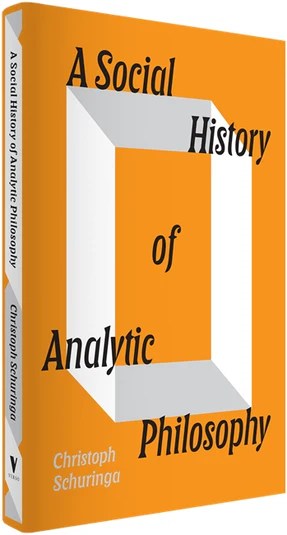
A Social History of Analytic Philosophy: A Discussion with Dr Christoph Schuringa

Analytic philosophy is the leading form of philosophy in the English-speaking world. What explains its continued success? Christoph Schuringa argues that its enduring power can only be understood by examining its social history. Analytic philosophy tends to think of itself as concerned with eternal questions, transcending the changing scenes of history. It thinks of itself as apolitical. This book, however, convincingly shows that the opposite is true.

The origins of analytic philosophy are in a set of distinct movements, shaped by high-ly specific sets of political and social forces. Only after the Second World War were these disparate, often dynamic movements joined together to make ‘analytic philosophy’ as we know it. In the climate of McCarthyism, analytic philosophy was robbed of political force.

To this day, analytic philosophy is the ideology of the status quo. It may seem arcane and largely removed from the real world, but it is a crucial component in upholding liberalism, through its central role in elite educational institutions. As Schuringa concludes, the apparently increasing friendliness of analytic philosophers to rival approaches in philosophy should be understood as a form of colonization; thanks to its hegemonic status, it reformats all it touches in service of its own imperatives, going so far as to colonize decolonial efforts in the discipline.

Christoph Schuringa studied philosophy at King’s College, Cambridge and Birkbeck College, University of London. He has published widely on the history of philosophy and on Marx and Marxism, and is associate professor of philosophy at Northeastern University, London. His writing has appeared in Jacobin, New Left Review, European Journal of Philosophy and elsewhere.

29th Oct

What is a society without a state? Gilles Deleuze and Félix Guattari on social organisation. A Talk by Prof. Henry Somers-Hall 

It is a common starting point when looking at societies to see them in terms of power – the more a society is able to marshal its resources, the more advanced the organisation of that society. In this talk, I want to explore the implications of this assumption for how we conceive of society. I also want to set out the argument by the French philosophers Gilles Deleuze and Félix Guattari for the claim that power, at least in the way we have traditionally understood it, is not central to social organisation, showing some of the possibilities that open up once we reject this assumption. 

Henry Somers-Hall is a professor of philosophy at Royal Holloway, University of London. His work focuses on the interplay between 19th century German idealism and the 20th century French philosophical tradition. His most recent books are Judgement and Sense in Modern French Philosophy (Cambridge University Press: 2022), The Deleuzian Mind (co-edited with Jeffrey Bell, Routledge: 2025)), and Reading A Thousand Plateaus: Adventures in Nomad Thought (forthcoming Edinburgh University Press, 2026). 

12th Nov

The Meaning of Scholasticide: Colonial Strategies and Palestinian Resistance. A talk by Dr. Nadia Naser-Najjab 

Most Palestinians involved in the education system face challenges of considerable scope and intensity. These obstacles have significant impact on educational development, attendance and learning outcomes.  Israel’s relentless efforts to destroy Palestinian education fall under the range of actions prohibited by the Genocide Convention, and more specifically ‘scholasticide’. However, Israeli colonial strategies to constrain and limit the development of the Palestinian education substantially predate the ongoing war, and indeed contemporary wars, in the Gaza Strip, being concretely embodied by Israeli practices across historical Palestine. I will demonstrate this by considering Palestinian in broad perspective and over a long period of time, albeit with particular emphasis on Israel’s targeting of the Palestinian higher education system. In doing so, it will refer to the categorisation of Palestinians and the fragmentation of the land to enable Israel control Palestinian education, censor their narrative and scrutinise students and teachers. I will also show how Palestinians, despite the hardship, do not lose hope, remain resilient and never give up. 

Dr. Nadia Naser-Najjab is Senior lecturer in Palestine Studies, European Centre for Palestine Studies- Institute of Arab and Islamic Studies, University of Exeter. Prior to this, she was an Assistant Professor, Birzeit University, Department of Philosophy and Cultural Studies and the MA program in Arab Contemporary Studies. Nadia holds a PhD in Middle East Studies form the University of Exeter.  

 Her most recent book is Covid-19 in Palestine: The Settler Colonial Context, Bloomsbury Publishing 2024.  

She also published Dialogue in Palestine: The People-to-People Diplomacy Programme and the Israeli-Palestinian Conflict (Bloomsbury Publishing, 2020) 

Her research is based on first-hand experience and original data collection.   

26th Nov

The ideology of economic growth, and its philosophical construction. A talk by Dr Gareth Dale

The ‘growth paradigm’ — i.e. the postulate that economic growth is good, imperative, essentially continuous (even limitless), and the principal remedy for a litany of social problems — is ubiquitous today. For all their differences, Liz Truss and Keir Starmer shared the (specifically triplicate) mantra: ‘growth growth growth.’ Yet in historical terms the domination of growth ideology is recent. The growth paradigm is unique to modernity. This paper will briefly touch upon what is involved in the suggestion that economic growth be understood as ideology, before, in its main part, turning to examine the seventeenth-century emergence and consolidation of growth ideology, paying particular attention to philosophers and economic thinkers. In concluding, the question of ‘degrowth’ will be broached. 

Gareth is Associate Head of the Department of Social and Political Sciences. He worked at Birkbeck, the LSE, and Swansea University before joining Brunel University in 2005. His most recent books are the edited collections Revolutionary Rehearsals in the Neoliberal Age (Haymarket 2021) and Exploring the Thought of Karl Polanyi (Agenda 2019). In 2016 he published Karl Polanyi: A Life on the Left (Columbia UP) and Reconstructing Karl Polanyi: Excavation and Critique (Pluto)and Karl Polanyi: The Hungarian Writings (Manchester UP), and a critical appraisal of ‘Green Growth’ strategies (Zed Books), and The Politics of East European Area Studies (co-edited; Routledge). His earlier books were on Karl Polanyi (Polity, 2010), the political economy of Eastern Europe (Pluto), migrant labour in the European Union (Berg), and a trilogy on East Germany: its economic historyprotest movements, and 1989 revolution (Peter Lang, Routledge, and Manchester UP).

10th Dec

Mattering, Sincerity and Trustworthiness. A talk by Prof. Philip Goodchild

For a philosopher, much contemporary communication lacks substance: it directs attention to that which does not matter, its concerns are often insincere, and its claims are untrustworthy.  So what is substance?  Instead of evaluating things by their price, their impact, their likes, or their fulfilment of arbitrary objectives, it is possible instead to take a philosophical orientation from these problems: what really matters, what is truly sincere, and what is ultimately trustworthy?

These are not simply problems we can formulate ourselves.  They happen to us in any crisis which provokes thought; they are a reason for thinking.  This talk will explore what might be meant by the mattering, sincerity, and trustworthiness of things themselves by describing how such problems arise in contemporary life.

Philip Goodchild is Professor of Religion and Philosophy at the University of Nottingham.  He is the author of several books, including Theology of Money (2007), the Credit and Faith trilogy (2020-21), and Rethinking the Existence of God: Renewing Metaphysics after the Critical Turn (forthcoming) – the Appendix forming the basis for this talk.

All talks will take place at the FCH Campus of the University of Gloucestershire in Rm. HC203 except the social discussion, which is at the Everyman Theatre in Cheltenham.

You can find a map of the campus here: https://www.glos.ac.uk/visit-us/our-campuses/francis-close-hall-campus/

Contact email is: glosphilsoc@gmail.com

We are a local partner of the Royal Institute of Philosophy and these events are funded by a grant from them. Their website can be found here: https://royalinstitutephilosophy.org/.

Spring Programme 2025

5th February

Evil – does it exist and if so, what is it?

Is evil real or just a human construct? Is there a difference between an evil act and one that is merely unfortunate? Can we speak of a radical evil that goes beyond any moral law and towards which there could be no recompense nor forgiveness, such as genocide or the torture of innocents? Kant argued that radical evil was a fundamental flaw of human nature that placed our own selfishness above morality. Perhaps you have your own version of radical evil, or maybe you believe no such thing exists.

This is a social and open discussion meeting. It is a nice opportunity to say ‘hello’ after the Xmas and the New Year and to meet old and new members.

This meeting will take place in the Director’s Lounge at the Everyman Theatre in Cheltenham starting at 7 pm. Here is their website. https://www.everymantheatre.org.uk/

If you want to find out more about what philosophers think about evil, then you might want to read this https://plato.stanford.edu/entries/concept-evil/.

I hope to see you there.

19TH February

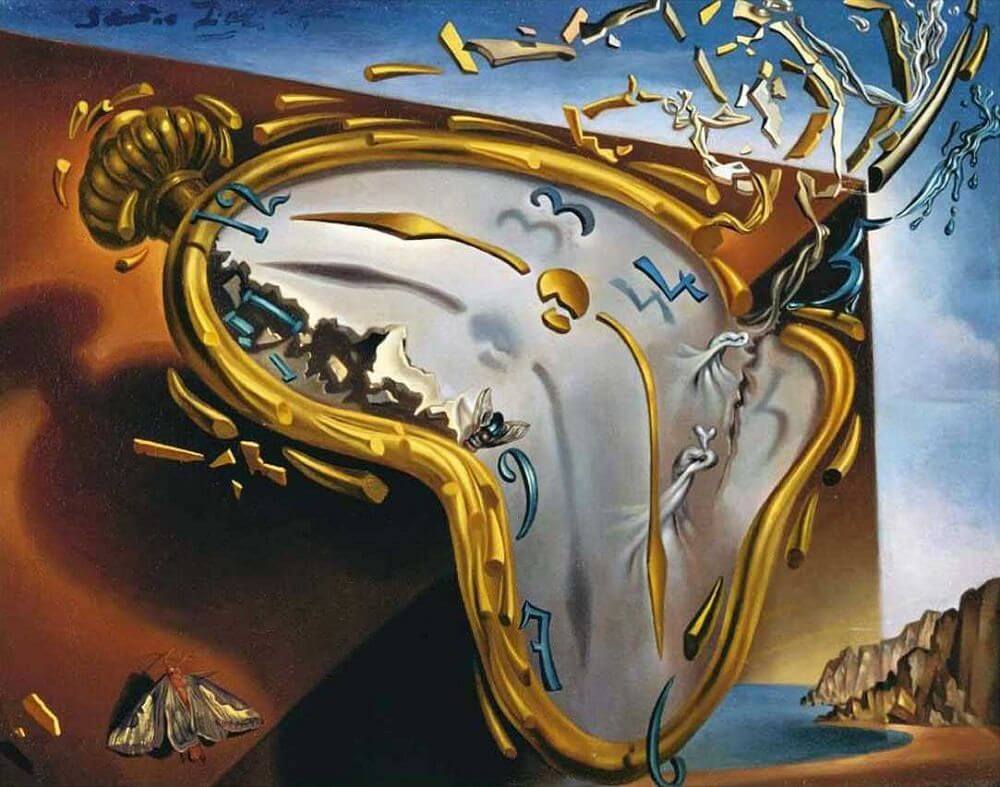
Time and how it’s marked, and effects our lives. A discussion led by David Garnett

David has been a member of the GPS for over 12 years and this will be his fourth talk to the Society.

He is a social constructionist and his presentation is based on how individuals and society construct their understanding of the world with the main theme being how we deal with Time and how it’s marked, and effects our lives,  The presentation also includes how we all construct mental models and use them in our daily lives. The session will be part interactive and participants are encouraged to get involved.

5th March

What’s in a Cultural Hegemony: ‘Feel-Good’ Literature, Chronic Fatigue Syndrome (ME/CFS), and Capitalism. A talk by Amélie Doche.

Amélie Doche is an AHRC-funded doctoral researcher in English language and literature at Birmingham City University. Her PhD – carried out in collaboration with the literature development organisation Writing West Midlands – explores discourses of value in contemporary literary culture. Amélie’s articles have appeared in Textual Practice, Iperstoria, The Journal of Languages, Texts, and Society, and English Studies. She’s happy to be contacted via email (amelie.doche@mail.bcu.ac.uk) or on X (@LaDoche).

My talk focuses on hegemonic discourses of value as they intersect with feel-good literature, online discourses of ME/CFS recovery, our culture of immediacy, our society’s fetishisation of self-help (to cure one’s mental and physical diseases) and self-improvement (to increase one’s performance and success). During times of personal and cultural crises, a majority of readers turn to feel-good romance and pop poetry for comfort and escapism. I read the production and reception of Donna Ashworth’s Wild Hope and Kim Nash’s Escape to the Country – among others – diffractively through the lenses of mass-entertainment consumer culture, mental capitalism, performative vulnerability and sincerity (assessed in the author – ad hominem), the instrumentalisation of imagination in popular self-help, and individualism. My presentation is structured into three main sections. The first section explores readers’ attraction to feel-good genres within the context of contemporary cultural dynamics. The second section analyses feel good and discourses of ME/CFS recovery focusing on a specific mode of knowledge activation: archetypal, where the myth of personal salvation is both reinforced and co-created. The final section examines the allure of feel-good genres and discourses of ME/CFS recovery in connection to current tendencies toward magical thinking –an intensified form of positive psychology – and infantilism.

19th March

Forms of Nature: how to draw the line between real nature and manmade copies. A talk by Maria Balaska.

This talk responds to an increasing presence of synthetic nature and the consequent blurring of the boundary between what is natural and what is artificial. It investigates whether and how we can still hold a conceptual distinction between real nature and artificial nature, and our experiences of them. Drawing from Aristotle and Heidegger on the Greek concept of phusis, it rejects the idea that nature is reducible to matter -and therefore not essentially different from what is manmade- and puts forward, instead, a dynamic view of nature as informed and intelligible activity. The fact that qua activities beings by nature are comprehensible and intelligible to us while being irreducible to our own purposes creates a special link between nature and the human mind, which is absent in the case of replicas.

Maria Balaska is a research fellow at the philosophy department of Åbo Akademi University, Finland. She works on Wittgenstein, Heidegger, and the philosophy of psychoanalysis. Her current research project, funded by the KONE Foundation, investigates the conceptual distinction between real and fake nature. Her latest book is Anxiety and Wonder: on Being Human (Bloomsbury, 2024).

2nd April

Deus sive Nature: An Introduction to the Philosophy of Benedict Spinoza. A talk by Christopher Thomas.

Benedict Spinoza has been referred to as ‘The Renegade Jew Who Gave Us Modernity’, but his philosophy nevertheless remains eclipsed by his more famous contemporaries, including Rene Descartes and Gottfried Leibniz. Unlike Descartes’ cogito ergo sum and Leibniz’s principle of sufficient reason, Spinoza’s most significant ideas, including his now infamous phrase Deus sive Natura, remain largely unknown and misunderstood. In this talk I will introduce two of Spinoza’s core ideas: His substance monism and his philosophy of affect and show how the former leads into, and offers a ground to, the latter.

Dr Christopher Thomas is a Senior lecturer in Philosophy at Manchester Metropolitan University. My research interests include early modern philosophy–specifically the philosophy of Benedict Spinoza–, contemporary French philosophy–specifically the philosophy of Gilles Deleuze and Simone Weil–, aesthetics, and art theory.

7th May

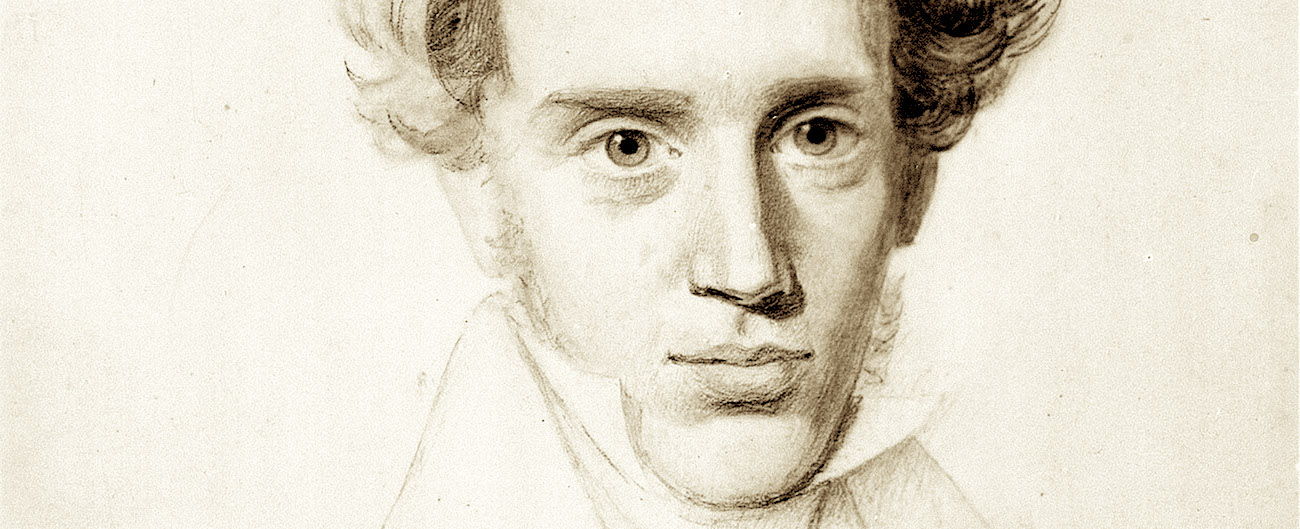
The value of anxiety in Kierkegaard and Simone de Beauvoir. A Talk by Erin Plunkett.

Søren Kierkegaard; drawing by Niels Christian Kierkegaard, circa 1840

There has been an explosion of anxiety in recent years, both diagnosed anxiety disorders—the most common mental health disorder worldwide—and wider feelings of anxiety, especially acute among young people. Existentialism and phenomenology offer a rich resource for thinking about the meaning of anxiety, one that has contributed to psychotherapeutic discourse but also diverges from it. While most therapeutic approaches and increasingly educational practices aim at the reduction of anxiety, Kierkegaard and Beauvoir argue for anxiety’s value, particularly for its role in forging a meaningful existence. For Kierkegaard, anxiety is a ‘holy hypochondria’ that won’t allow us to forget the spiritual dimension of ourselves.

Dr Erin Plunkett is Joint Head of Philosophy at the University of Hertfordshire and works on Kierkegaard, phenomenology, existentialism. and philosophy of religion. She is the editor of Kierkegaard and Possibility (2023) and The Selected Writings of Jan Patočka: Care for the Soul (2022), as well as the author of A Philosophy of the Essay (2018).

21st May

AGM

All talks will take place at the FCH Campus of the University of Gloucestershire in Rm. HC203 except the social discussion, which is at the Everyman Theatre in Cheltenham.

You can find a map of the campus here: https://www.glos.ac.uk/visit-us/our-campuses/francis-close-hall-campus/

We are a local partner of the Royal Institute of Philosophy and these events are funded by a grant from them. Their website can be found here: https://royalinstitutephilosophy.org/.
Contact email is: glosphilsoc@gmail.com

Autumn Programme 2024

25th September

If the Human Species Ceased to Exist Would that be a Bad Thing?

We are so proud of ourselves as a species! Maybe in the past, we thought we were the best thing ever. But do you think the planet, or even the universe, would be a better place if we didn’t exist at all, or had never existed? Our existence is totally contingent. There’s no reason why we need to be here. When you think about the violence, destruction and harm we’ve caused in our short time on this planet, it makes you wonder if might be better if we never existed. If that’s true, would it have been better for each of us to never have been born, and if we’ve had the misfortune to be born, never to procreate?

This is a social and open discussion meeting. It is a nice opportunity to say ‘hello’ after the summer for new and old members.

If you are interested in exploring anti-natalism in greater depth, then this is a useful website. https://iep.utm.edu/anti-natalism/

This meeting will take place in the Director’s Lounge at the Everyman in Cheltenham. Here is their website. https://www.everymantheatre.org.uk/

7th October

Researching the ‘gender wars’ during a war on LGBTQ+ rights. A talk by Finn Mackay (UWE)

Finn Mackay is a longstanding feminist activist and writer and researcher in queer theory and LGBTQ+ rights. Finn is the author of two books ‘Radical Feminism: Activism in Movement’ published by Palgrave, and ‘Female Masculinities and the Gender Wars’ published by Bloomsbury. This talk will cover the experiences of researching trans rights and LGBTQ rights at a time of backlash and provide a brief summary of research into queer masculinities and female masculinities. 

Finn is currently a Senior Lecturer at the University of the West of England in Bristol, with a PhD from the Centre for Gender and Violence Research at the University of Bristol, and a professional background in youth work, education and training including with the women’s sector and in national policy on domestic abuse prevention education.

Finn is a Trustee of the Feminist Archive and the British Sociological Association and on the Editorial Board of the International Journal of Lesbian Studies, and is a proud Ambassador for the Worker’s Educational Association. 

23rd October

A surplus of fiction? Robot and AI substitutes to human relationships. A discussion with Kathleen Richardson (De Montfort University)

Kathleen Richardson is a Professor of Ethics and Culture of Robots and AI and part of the Europe-wide DREAM project (Development of Robot-Enhance Therapy for Children with AutisM). 

Kathleen completed her PhD at the Department of Social Anthropology, University of Cambridge. Her fieldwork was an investigation of the making of robots in labs at the Massachusetts Institute of Technology. After her PhD Kathleen was a British Academy Postdoctoral Fellow (BAPDF), a position she held at the University College London. Kathleen’s postdoctoral work was an investigation into the therapeutic uses of robots for children with autism spectrum conditions. In 2013, she was part of the Digital Bridges Project, an innovative AHRC funded technology and arts collaboration between Watford Palace Theatre and the University of Cambridge.

Kathleen is author of An Anthropology of Robots and AI: Annihilation Anxiety and Machines. Kathleen has completed her second book Challenging Sociality. 

In 2015 she, along with her colleague launched the Campaign Against Sex Robots to draw attention to problematic effects on new technologies on human relations, and their potential impact to create new layers of inequalities between men and women and adults and children. She advocates a compassionate and violence free technology based on freedom ethics and is critical of coercive and violent models of human lived life that are transferred to the making of new technologies. Richardson is developing a theory of robotics inspired by anti-slavery abolitionist feminism.

6th November

Creation out of Nothing. A talk by Lars Iyer (Newcastle University) and William Large (University of Gloucestershire)

In the first part of this talk, William Large will explain the historical development of the idea of ‘creation out of nothing’ from the challenge of philosophy to monotheism. The requirement that God created both matter and the form of matter led to an ontological innovation that culminated in the idea of participation in Aquinas and a new way of thinking about God’s being. In the second part of the talk, Lars Iyer will contrast the the idea of creation out of nothing with creation out of matter through the Hebrew expression tohu va-bohu, and the persistence of evil in the world.

Lars Iyer is a Professor of Creative Writing at Newcastle University. Before joining Creative Writing, he taught philosophy for many years at Newcastle University. He has published widely on aesthetics, with special emphasis on the philosophy of literature, and has a particular interest in the philosophy of music.

He has published six novels, which, by their formal experimentalism and subject-matter, are rooted in European traditions of literature, and have been linked by reviewers to Beckett and Bernhard. His novels reflect his interests in the Continental European thought and are fundamentally comic in style and vision. They have been translated into several languages and long- and shortlisted for various awards.

William Large is a Associate Professor of Continental Philosophy at the University of Gloucestershire. He is the author four books, Maurice Blanchot [co-authored] (Routledge, 2001) Ethics and the Ambiguity of Writing: Emmanuel Levinas and Maurice Blanchot, ( Clinamen, 2005), Heidegger’s Being and Time (Edinburgh University Press, 2007), and Levinas ’Totality and Infinity: A Reader’s Guide (Bloomsbury Academic, 2015]. His articles have appeared in The Journal of the British Society of Phenomenology, Theology & Sexuality, Textual Practice, Literature and Philosophy, The Journal of Nietzsche Studies, Angelaki, Journal of Cultural Research, Religions, The Journal of Cultural and Religious Theory and The Journal for Continental Philosophy of Religion.

20th November

The Extended Mind and Enactivism. A talk by John Harries (Oxford University)

There is a long tradition in the philosophy of mind, psychology and the cognitive sciences which locates cognition firmly inside the skull and which draws extensively on the metaphors of computing to describe the architecture of the mind. This neuro-centric view has been reinforced by the development of neuroimaging technologies, in particular Functional MRI. However in recent years there has also emerged a view of cognition with its roots in American Pragmatism and Phenomenology which radically extends the boundary of the mind to include the body and the surrounding environment and which gives due weight to the often overlooked role of affect (mood and emotion). The term “4E cognition” has been coined to describe this approach. The overlapping concepts of 4E describe the mind as embodied, embedded, enactive and extended. In this view the mind emerges in the interactions of embodied organisms with their environment. In my short presentation I will try to do justice to the key ideas of enactivism and the extended mind and why they open up rich research horizons and provide an exciting alternative to neuro centric approaches to cognition.

John Harries’ career has been divided between IT systems development and Organisational Development often combining the two. I have focused principally on the domain of healthcare in the UK, Europe and the USA. For some years I was a Fellow of the King’s Fund a charitable healthcare think tank and consultancy. Some years ago my dissertation for an MSc in Organisational Psychology at Birkbeck (London University) studied early adopters of mobile email. I was struck by the strength of emotional attachment displayed by the users of Blackberries for their devices. This phenomenon has of course exploded with the adoption of smart phones. I have since pursued this interest in the emotional relationships between people and things, in particular architecture. After my retirement I was accepted to study for a Doctorate in Cognitive Archaeology at Oxford University under the supervision of Professor Lambros Malafouris. I completed this in 2021. My dissertation was entitled “Affect and Materiality in Therapeutic Spaces” and focused on the emotional relationship between people (staff, patients and families) and the environment in which they worked or in which they or their loved ones were cared for. In my research I made use of Material Engagement Theory (Malafouris 2013) with its foundations in Enactivism and the Extended Mind.

4th December

Place and the Importance of Being There. A talk by Tom Spooner (University of Gloucestershire)

This talk will be about ‘place’, that is, place as a lived setting comprising both physical and emotional phenomena. Exploring historical developments in Western thinking, and ideas relating to globalism and the arrival of the digital age, place will be discussed as an idea that is commonly obscured from everyday experience today. With reference to his own artistic practice, and the thinkers informing his approach to making work, Tom will talk about why place matters to him.

Tom is an artist and educator currently teaching on the BA Illustration course at the University of Gloucestershire. Since graduating from the Royal College of Art in 2016, he has exhibited, published, and taught widely, in the UK and abroad.

All talks will take place at the FCH Campus of the University of Gloucestershire in Rm. HC203.

You can find a map of the campus here: https://www.glos.ac.uk/visit-us/our-campuses/francis-close-hall-campus/

All talks start at 7 pm and usually last for an hour.

We are a local partner of the Royal Institute of Philosophy and these events are funded by a grant from them. Their website can be found here: https://royalinstitutephilosophy.org/.
Contact email is: glosphilsoc@gmail.com

Spring Programme 2024

Jan 31st

A Nation of Shopkeepers: The Unstoppable Rise of the Petty Bourgeoisie a talk by Dan Evans

The petty bourgeoisie ― the insecure class between the working class and the bourgeoisie ― is hugely significant within global politics. Yet it remains something of a mystery.

Initially identified as a powerful political force by theorists like Marx and Poulantzas, the petit-bourgeoisie was expected to decline, as small businesses and small property were gradually swallowed up by monopoly capitalism. Yet, far from disappearing, structural changes to the global economy under neoliberalism have instead grown the petty bourgeoisie, and the individualist values associated with it have been popularized by a society which fetishizes “aspiration”, home ownership and entrepreneurship. So why has this happened?

Dr Dan Evans is currently a lecturer in Criminology at Swansea University. His research has been published in numerous academic journals and has recently published a book A Nation of Shopkeepers. He is a public sociologist and has made numerous television and radio appearances and written for popular platforms like Jacobin, The New Statesman, Open Democracy, The Conversation, The Guardian, Planet: The Welsh Internationalist, and more.

Feb 14th

Feb 28th

Michel Serres on Politics, Ethics and the Natural World – Contracts and Translations a talk by David Webb

In 1990, Michel Serres published The Natural Contract, a book on environmental philosophy in which he made what was at the time a radical proposal that nature should be given similar legal rights and protections to people. This idea has since become a reality in many parts of the world, but there was always more to Serres’s proposal than a programme of legislation. His work, spanning nearly sixty years and over sixty books, engages with the history of philosophy, mathematics, the sciences, information theory, cybernetics and much more. Along the way, he devised and practised an almost unique way of thinking in which there is no single principle or logic to guide us through a complex and changing world.

In this talk, I’ll outline Serres’s idea of a ‘natural contract’ and then introduce features of his thinking that mean we cannot take it at face value as a legal artefact. Instead, it becomes a thread that we can follow to think about our relation to nature as a variation on forms of relation within nature itself. I’ll then show how this makes possible a distinctive approach to ethics that can – perhaps must – be developed alongside the legal dimension of the natural contract. With Serres’s work, we can draw virtues from the natural world that can inform a human ethics which is consistent with sustainable processes in nature

David Webb is Professor of Philosophy at Staffordshire University. His interests include Michel Foucault’s conception of critique as a rational practice, and above all the ethical and political significance of the work of Michel Serres. He is co-editor of the series Michel Serres and Material Futures at Bloomsbury Press and is the co-translator with Bill Ross of Serres’s book The Birth of Physics (Rowman and Littlefield, 2018).

March 20th

An Introduction to the Thought and Life of Simone Weil a talk by Christopher Thomas

The philosopher, mystic, labourer, and political activist Simone Weil lived a short life that burned brightly. In recent years the work of this otherwise marginal figure of 20th Century French philosophy has seen a renaissance of interest. Books, talks, conferences and even think pieces have begun turning to the new and unusual vocabulary of this singular thinker.

In this talk, Dr Christopher Thomas, co-founder of the UK Simone Weil Research Network, will outline a little about the life of Simone Weil, before introducing how her unique creation theology leads into her most popular ethical concept, that of attention.

April 24th

Philosophy as a Way of Life a talk by Jill Marsden

Nietzsche once wrote that the product of the philosopher is their ‘life’ and is more important than their works. What might it mean to live philosophically today? Does philosophy as an ‘art of living’ have implications beyond the self-improvement industries?

Jill Marsden is Professor of Literature and Philosophy at the University of Bolton where she teaches in the department of English and Creative Writing.

May 15th

Busting some myths about Hegel and Marx a talk by Gordon Finlayson

Professor Gordon Finlayson teaches philosophy at Sussex. He works on German philosophy and Frankfurt School critical theory, especially Adorno and Habermas. He was a graduate student alongside William Large, back in the day.

All talks will take place at the FCH Campus of the University of Gloucestershire in Rm. HC203.

You can find a map of the campus here: https://www.glos.ac.uk/visit-us/our-campuses/francis-close-hall-campus/

All talks start at 7 pm and usually last for an hour.

We are a local partner of the Royal Institute of Philosophy and these events are funded by a grant from them. Their website can be found here: https://royalinstitutephilosophy.org/.

Contact email is: glosphilsoc@gmail.com

Autumn Programme 2023

Wednesday 4th October

‘Girls will be boys and boys will be girls’. Sex and Gender in the 21st Century

The first meeting of the GPS will be at the Director’s Lounge at the Everyman Theatre in Cheltenham at 7 pm.

This is a social and open discussion meeting. It is a nice opportunity to say ‘hello’ after the summer and tell you about the programme for the winter programme.

The title of open discussion will be ‘Girls will be boys and boys will be girls’: Sex and Gender in Contemporary Society. Is there a difference between sex and gender? Is sexuality fixed for human beings, and if it is fixed or fluid, then what are the implications for gender roles in society? What are the ontological, ethical and legal implications of the sex/gender system? We shall discuss these issues in an open, philosophical and respectful way.

This is a useful site that defines the terms sex and gender: 

https://www.coe.int/en/web/gender-matters/sex-and-gender#:~:text=Sex%20refers%20to%20%E2%80%9Cthe%20different,groups%20of%20women%20and%20men.

Wednesday 18th October

Time, Emotion and Mental Health a talk by David Garrett (Gloucestershire Philosophical Society)

David has been a member of the GPS for over 10 years and this will be his third talk to the Society.

He is a social constructionist and his presentation is based on how individuals and society construct their understanding of the world with the main themes being how we deal with time, emotion and mental health. The presentation also includes how we all construct mental models and use them in our daily lives. The session will be part interactive and participants are encouraged to get involved.”

Wednesday 1st November

The Conservative Party’s Crisis of Political Reproduction a talk by Phil Burton-Cartledge

Are the difficulties facing the Tories simply a matter of exhaustion, of the public getting fed up with them as they did in 1997 and 1964-66? Without peering beneath the surface, that appears to be the case. The antics of Johnson, Truss, and the do-nothing politics of Sunak are enough to give the most loyal Conservative voter pause. But, as my book – The Party’s Over: The Rise and Fall of the Conservatives from Thatcher to Sunak – argues, the Tories have a far more serious problem: a crisis of political reproduction. The mass base the Tories have built is overly dependent on older people generally and retirees in particular, and is a coalition premised on high property values, home ownership, rising pensions, and (to an extent) shielding the elderly while attacking the living standards of working age people and gutting the state of its capacity to do anything. Voting Conservative is not a consequence of getting old, but of the tendency of acquiring property throughout one’s life – however meagre that might be. If a Tory government is a block on this process of acquisition, it’s not going to generate future Conservative voters. And that makes the job of winning elections progressively more difficult. Unfortunately for the Conservatives, their policy preferences and rhetoric, especially their emphasis on “anti-woke” politics is wedded to cohering this coalition, which rules out the possibility of their reaching out to younger layers. In short, it is very difficult to see how the party can forge a new coalition of voters that can win them the next two general elections.

Bio: Dr Phil Burton-Cartledge is a course director at the University of Derby where he has led the Sociology programme for the last eight years. He blogs regularly about current affairs at his blog, All That Is Solid, and has written widely for Tribune, Jacobin, the New Statesman, and The Independent among others. The Party’s Over is the second paperback edition of Falling Down: The Conservative Party and the Decline of Tory Britain. It is his first book.

Wednesday 15th November

Wittgenstein on Science and Religion a talk by Genia Schönbaumsfeld

Genia Schönbaumsfeld is a Professor of Philosophy at the University of Southampton who specializes in Wittgenstein, Epistemology, Kierkegaard and the Philosophy of Religion.

Before coming to Southampton, Genia Schönbaumsfeld studied Philosophy at St. Hilda’s College, Oxford, Trinity College, Cambridge and the University of Vienna. Genia has been a Visiting Fellow at New College, Oxford and a Visiting Professor at the University of Regensburg, Germany. From 2003-06 she held a prestigious ‘Hertha Firnberg’ research fellowship at the University of Vienna, awarded by the Austrian Science Fund.

Genia is the author of A Confusion of the Spheres – Kierkegaard and Wittgenstein on Philosophy and Religion (Oxford University Press, 2007),  The Illusion of Doubt (Oxford University Press, 2016), and Wittgenstein on Religious Belief (Cambridge University Press, 2023). She is Associate Editor of the journal Philosophical Investigations, Advisory Board member of The Nordic Wittgenstein Review and Editorial Board Member of Anthem Studies in Wittgenstein. In 2020 she was elected to Council of the Royal Institute of Philosophy.

This is online seminar on Teams. You can find a link here to register: https://events.teams.microsoft.com/event/9e01d25d-4d6b-4c39-8085-7b7565b582b9@9ecbb753-a8b9-4f1b-b206-971692798a67

Wednesday 29th November

A Nation of Shopkeepers: The Unstoppable Rise of the Petty Bourgeoisie a talk by Dan Evans

The petty bourgeoisie ― the insecure class between the working class and the bourgeoisie ― is hugely significant within global politics. Yet it remains something of a mystery.

Initially identified as a powerful political force by theorists like Marx and Poulantzas, the petit-bourgeoisie was expected to decline, as small businesses and small property were gradually swallowed up by monopoly capitalism. Yet, far from disappearing, structural changes to the global economy under neoliberalism have instead grown the petty bourgeoisie, and the individualist values associated with it have been popularized by a society which fetishizes “aspiration”, home ownership and entrepreneurship. So why has this happened?

Dr Dan Evans is currently a researcher in WISERD Civil Society, exploring the changing world of work and the role and relevance of trade unions within the modern workplace. He previously worked for WISERD between 2014 and 2017, where he worked on the WMCS as well as researching childcare provision and the pupil deprivation grant. After leaving WISERD in 2017 he worked as a sociology and politics lecturer at Cardiff Centre for Lifelong Learning and at the University of Bath. He then had an extended hiatus from academia, working as a frontline support worker with rough sleepers in Cardiff for nearly 5 years. While outside academia he continued to pursue his academic interests and has written articles for popular publications such as Jacobin, New Socialist, and Planet: The Welsh Internationalist. He co-edited The Welsh Way: Essays on Neoliberalism and Devolution, which was published by Parthian Press in 2021, and he has recently finished a solo book on the petty bourgeoisie- A Nation of Shopkeepers– which was published by Repeater Books in early 2023.

Wednesday 13th December

Busting some myths about Hegel and Marx a talk by Gordon Finlayson

Professor Gordon Finlayson teaches philosophy at Sussex. He works on German philosophy and Frankfurt School critical theory, especially Adorno and Habermas. He was a graduate student alongside William Large, back in the day.

All talks will take place at the FCH Campus of the University of Gloucestershire in Rm HC203, except the talk by Genia Schönbaumsfeld, which will take place on Teams.

We are a local partner of the Royal Institute of Philosophy and these events are funded by a grant from them. Their website can be found here: https://royalinstitutephilosophy.org/.

Spring Programme 2023

Wednesday 8th February

The Question Concerning the Climate Crisis

Dr David Hall (University of Bristol & University of Gloucestershire)

For over 50 years scientists and campaigners have argued that we should listen to scientists on global warming. Yet despite decades of IPCC reports and international conferences and agreements, global greenhouse gases levels continue to rise, as do temperatures and sea levels. This is because our increasing prosperity and longer lives have largely been driven by burning coal and gas, so there is no simple fix. This means that the big question of the climate crisis, whether we can save ourselves and the planet, is not a straightforward scientific question. It is conventional to argue that we cannot solve the problem because of human nature, that we put ourselves ahead of other people and of future generations. The only alternative to disaster is an increasingly authoritarian international order, which enforces environmental targets to stop climate change.

I believe that we need a different approach. Martin Heidegger put forward an approach to understanding the development of our modern world, arguing that we are driven by what he termed the “essence of technology” to turn everything, including ourselves, into resources. From this perspective, the central problem is a human crisis, and the environmental crisis is inextricably linked. Only changing our way of being can answer this question, so that we can use the most powerful technology at our disposal to save the planet while freeing ourselves from being merely human resources, to be used and disposed at the whim of capital. I will argue that this is not utopian, but is both possible and necessary, showing how a vision of the future through art can show that there is an alternative to crudely rationalistic approaches.

David Hall joined the Green party in his teens, before his politics ripened. A PhD in theoretical physics led to a 30 year career in the NHS, where he advises on the medical use of radioactive materials across Bristol and Somerset. A certificate in moral philosophy in Newcastle is now being followed, 25 years later, by an MA by research in philosophy at the University of Gloucestershire, applying the thinking of the leading 20th century German philosopher Martin Heidegger to the Climate Crisis

Monday 20th February

Karl Polanyi and the Sacred

Dr Ben Trubody (University of Gloucestershire)

Karl Polanyi is arguably one of the 20th century’s most prophetic critics of capitalism. Whilst his magnum opus The Great Transformation is a prescient analysis of what can happen when the market economy is ‘freed’, disembedded from the limits of social-relations and treated as its own special independent reality. The same story can be told in terms of what happens when we no longer regard social-relations as ‘sacred’. That humans are on a course for self-annihilation because we hold some things more important than well-being, nature and life.

Dr. Ben Trubody is a lecturer at the University of Gloucestershire and tutor for the WEA.

Wednesday 17th May

The existential predicament of anticipating transitions at older age

Jessie Stanier (University of the West of England)

As an integral aspect of lived experience, anticipation is a mode of temporal orientation of crucial interest to philosophers and especially to phenomenologists. Anticipation can be understood as a mode of active expectation; it is a given set of norms that presents possibilities which bear on the present, calling for some response. The demographic of older people is predicted to increase substantially over the coming years, and this increase is often discursively anticipated as a problem to be solved or, in more hyperbolic cases, as an impending catastrophe. In a neoliberal context, such anticipations can perhaps be understood in relation to speculation, risk perception, and policy.

 Like many other public health issues, this demographic shift is widely addressed in an anticipatory mode by neoliberal interventions which aim at encouraging older people to live more healthily as individuals—particularly in anticipation of key moments of transition in later life. In this talk, I explore how phenomenological analysis of anticipation might serve to support existing critiques of top-down public health interventions. In the first half, I explore just how difficult it can be—or indeed impossible—to know in advance what the best approach to healthy ageing is, especially given that public health interventions aimed at improving transitions at older ages tend to advocate individual responsibility. In the second half, I explore phenomenologically how intersubjective norms pertaining to social imaginaries play an important role in structuring anticipations in personal experiences of ageing. I argue that social imaginaries can be understood as sites of potential transformation in experiences of anticipation at older age.

Jessie Stanier is a Lecturer in Philosophy at UWE Bristol. She is also a PhD student (nearing completion) at the Wellcome Centre for Cultures and Environments of Health at the University of Exeter. The PhD project draws together Jessie’s theoretical interest in critical phenomenology with her ethical and methodological interests in working together with participants on qualitative research. Jessie is Chair of the International Symposium for the BSP and she set the conference themes on ‘Engaged Phenomenology’ in 2020 and 2022. She completed her MA in Philosophy at KU Leuven, Belgium, in 2018. She is also a keen climber.

Wednesday 3rd May

Execs, Lies, and Videotape: How We Pay for the Misdeeds of Modern Media

Matthew Alford (University of Bath)

Matthew Alford is a writer of memoir and non-fiction, whose output is typically rooted in his application of Noam Chomsky’s Propaganda Model to contemporary Hollywood.
In postdoctoral work, Matthew focused on examining related conspiracy theories – on the alleged assassination of a maverick screenwriter and on the role of the military-industrial complex in the entertainment industry – which entailed archival and interview-gathering trips to Los Angeles and Washington, DC. Meanwhile, he developed his creative outputs and consequently co-produced and presented two feature-length documentaries based on his research, The Writer with No Hands (2014) and Theaters of War (2022).
In 2023, Matthew spoke about Julian Assange’s legal case for the Universal Periodic Review of Human Rights at the United Nations in Geneva. 

Autumn Programme 2022

Wednesday 12th October

Born into Conspiracy: Social Media and an Inadequate Understanding of Reality

Dr William Large & Dr Martin Randall (University of Gloucestershire)

There are conspiracies and conspiracy theories. Conspiracies are real, concocted by the shadow modern state machineries of disinformation and espionage. Conspiracies haunt the political spectacle in which we live. Conspiracy theories are fantasies of paranoia and longing. In the Digital Age, conspiracy theories have been intensified and accelerated by the economic model of the internet: surveillance capitalism. How do we resist the seductive allure of the conspiracy theory? With irony? With a better understanding of the nature of how we are born into conspiracy? Or, finally, with ethics and decency?

Both William and Martin teach at the University of Gloucestershire in the School of Education and Humanities.

Wednesday 26th October

Learning to live: Philosophy and Architecture

Rex Richards (University of Gloucestershire)

Today I want to talk to you about the connection between architecture and philosophy, the reason for this is twofold; first I am doing so because it is the chosen topic for my dissertation, and secondly it is because over recent months I have come to the conclusion that there needs to be more open discussion on the subject. Having seen the title to this presentation, it should become clear to those who have read the work of Pierre Hadot which direction I mean to take this discussion philosophically. For those who have not read his work, I am using Hadot’s text on spiritual exercises to help clarify what I mean when speaking about this connection between architecture and philosophy.

With Hadot’s work used as a focusing lens, I will be making a comparison between a positive and negative example of architecture. For the negative example, I will be speaking about prisons and more specifically what Foucault has to say about them, in order to better illustrate how damaging architecture can be. As for the positive example, I will be speaking about the Danish architecture firm the Bjarke Ingels Group so that a clear demonstration of the positive effects of architecture can be articulated.

Wednesday 9th November

Knowing the Future

Andrew Curry (The School of International Futures)

The futurist Andrew Curry will discuss the ideas underpinning futures work, and the claims that futurists make when they talk about the future—from forecasting, to images of the future, to notions of anticipation. 

Andrew Curry has been a practising futurist since the turn of the century, working for The Henley Centre, The Futures Company and currently The School of International Futures. He has worked extensively with clients across the public, private and non-profit sectors, while also engaging actively with future theory and practice. 

He is on the Advisory Boards of the Institute of Social Futures at Lancaster University and of the World Futures Review.

—-

Wednesday 23rd November

Who dictates the language of violence: ‘terror’ versus ‘security’ 

Suhaiymah Manzoor-Khan

Poet and writer Suhaiymah Manzoor-Khan will explore the importance of the language employed to talk about violence. Why acts of violence perpetrated by racialised individuals categorised as ‘terror’, whilst state-sanctioned systems of brutalisation are named ‘securitisation’? How does the categorisation of violence hide, displace or reveal its causes? Why is it important to think about violence as relational? And what happens when we change the language that we use to describe it?

Suhaiymah Manzoor-Khan is the author of the poetry collection, Postcolonial Banter (2019), which features eight years of poetry including her viral poem This Is Not a Humanising Poem, which placed her as runner-up of the 2017 National Roundhouse poetry slam. Her latest book, Tangled in Terror: Uprooting Islamophobia, was published in 2022 with Pluto Press to wide acclaim – described as ‘courageous’ by rapper, Lowkey, ‘one of the most exciting voices of her generation’ by channel 4 journalist Fatima Manji, and ‘fierce’ by feminist activist Lola Olufemi. Suhaiymah’s poetry and prose has appeared across radio and TV, she has written for The Guardian, Independent, Al-Jazeera and gal-dem and has essays in multiple anthologies. Currently she is Writer in Residence at the Leeds Playhouse and under commission to write plays for Kiln Theatre and Freedom Studios. Suhaiymah is the co-founder of the Nejma Collective, a collective of volunteers working in solidarity with Muslims in prison. 

Wednesday 7 December

Why are Common Notions  anything but Common? An Introduction to the Physics of Thought.

Matthew Hammond

In this talk, I will attempt to communicate my confusion and delight in Spinoza’s concept of Common Notions. First of all, a few words need be said – If you read Spinoza’s ‘Ethics’ somewhat hastily you can almost miss them entirely. They are the second type of knowledge introduced in Book 2, prop. 40, scholium 2, and discussed briefly in subsequent propositions without seeming central to the work. 

Now for me personally it was the great French philosopher Gilles Deleuze, who points out in his otherwise problematic book  ‘Expressionism’, the unsatisfactory nature of such a rendition.     

Common notions are after all, the one form of knowledge that significantly changes during the course of Spinoza’s life in its meaning and power. In this discussion I will look at the ‘monster’ (a Deleuzian term) which they become by the end of Spinoza’s thought, and exactly how he replaces reason, formal reason, with common notions – which open up the body and therefore the mind, to the world beyond, in ever-changing and evolving patterns, rooting reason in physics and physiology. My reading is unashamedly idiosyncratic and it will attempt to understand the monster which Spinoza is breeding by breeding new ‘monster crosses’ of my own. 

 A close reading of ‘Ethics’, it seems to me, reveals that Spinoza introduces and develops the theme of ‘common notions’ four times. These four, form an effective schemata which criss-crosses ‘Ethics’. However, in order to understand this monstrous schemata, I will look to four characters from a very different time, author and book. This author and this book being Charles Dickens ‘Bleak House’. A book remarkable in so ways. One of which is absolutely in it’s sustained attempt to understand the power of reason to grasp at a world of madness and greed, and change it for the better. So that the theme of Dickens is the theme of Spinoza – How reason can still leave one to scream  – ‘I see and approve the best but must do the worst’ – a theme so very relevant today.

 By breeding a ‘monster’ suspended between ‘Ethics’ and ‘Bleak House’, I will develop the fourfold schemata of Spinoza’s ‘common notions’; of habit, of reason, of the surprise and of the unknown. All these common notions have their own timbre and rhythm, but all, at different levels and in different ways, ask that most pertinent of modern questions: How can I set myself free? As an individual within society, but also set society free, from the tyranny of ‘great men and their reasoning’?

This might all sound a little abstract, but as I will try to show, for me, understanding Common Notions is very much the stuff of life and livelihood, and this for the most practical of reasons. In a parallel world, I am a maths teacher and I daily use my understanding of Spinoza’s common notions to navigate pupils through the rigours, trials and tribulations of higher maths, and do it in two countries. Common notions don’t just set one personally free, they necessitate sharing that freedom, and the understanding that is integral to it, wherever that is found. 

Matthew Hammond was educated at Cambridge, and Keele Universities, and then taught Maths, self-employed, working in the afternoons and evenings, so that he could study Philosophy every morning. He has tutored political philosophy at Exeter University and at the LSE Summer School in Philosophy.

He is a professional artist and independent thinker, mixing the two whenever possible, especially in his ‘performance philosophy’ shows, where when he lived in the UK, he brought alive both the history of philosophy, and ideas that people might find useful to think with – billed up as ‘Matthew Hammond jumps about the stage, making theatre out of all those books you meant to read but never got around to…’ As a professional storyteller he has performed at countless events, in the UK and France, including returning from where he now lives in the south of France, to appear regularly at the Glastonbury Festival. 

He has presented many papers including one on Jane Austen at the Centre for Research in Philosophy & Literature at the University of Warwick’s conference on ‘Coleridge, Friendship, & the Origins of Modernity’, on Philosophy as Comedy at the ‘Philosophy As…’ Conference at the Senate House, in London, a paper on Foucault’s middle period, at the Brave New World Conference in Politics at the University of Manchester, on Hume at The Strange Encounter of Kant & Deleuze Conference at the University of Greenwich and on Philosophy as Performance at the University of Leeds. 

His paper on Deleuze, Leibniz and Spinoza, delivered at the Deleuze & The Fold Workshop at the Centre for Research in Philosophy & Literature, University of Warwick, features in “Unfolding the Deleuzian Fold; Gilles Deleuze’s Fold: A Critical Reader’ edited by Darren Ambrose and Siobhan McKeown, (published by Palgrave Macmillan). 

You can see some recording of his performances on YouTube https://www.youtube.com/playlist?list=PL6849E6A1C17FA1FA.

Location

All the talks (apart from talks that will take place on Zoom) will be at FCH campus, University of Gloucestershire, Rm. HC202

All talks will begin at 7 pm and will usually last for 1 hr.

Spring Programme 2022

26th January

Professor Havi Carel (University of Bristol):  What is it to be vulnerabilised?  

This talk proposes the concept of vulnerabilisation to refine common talk of ‘vulnerability’. I introduce the concept and distinguish several ways individuals can be made vulnerable by interpersonal encounters and interactions with social structures. I then offer two concepts from contemporary philosophy of illness to help us understand the dynamics of vulnerabilisation: the structural phenomenon of ‘institutional opacity’ and the clusters of person-level failings we call ‘pathophobic vices’. I end by suggesting that these concepts can illuminate the dynamics of vulnerabilisation in ways that may be of use to philosophers of illness and disability.  

Havi Carel is Professor of Philosophy at the University of Bristol and the author of Phenomenology of Illness (2016), Illness (2008, 2013, 2018 shortlisted for the Wellcome Trust Book Prize), and of Life and Death in Freud and Heidegger (2006).

This talk will be a Zoom talk and will begin at 7 pm. If you want to join the meeting please email glosphilsoc@gmail.com who will send you the invitation.

23rd March

Professor Lisa Guenther (Queen’s University) Solitary Confinement and the Meaning of Existence.

The testimony of prisoners in solitary confinement shows that prolonged isolation has a profound effect on their sense of time, space, and identity, to the point of making some people feel like they no longer exist.  Why do we do this to people in the name of justice?  And what does this testimony teach us about what the meaning of existence? 

ALL WILL BE REVEALED in this informal chat.

Lisa Guenther is Queen’s National Scholar in Political Philosophy and Critical Prison Studies. She is the author of Solitary Confinement: Social Death and its Afterlives (2013) and The Gift of the Other: Levinas and the Politics of Reproduction (2007), and co-editor of Death and Other Penalties: Philosophy in a Time of Mass Incarceration (2015) with Geoffrey Adelsberg and Scott Zeman. Recent publications include “Seeing Like a Cop: A Critical Phenomenology of Whiteness as Property” (in Race as Phenomena, 2019) and “Police, Drones, and the Politics of Perception” (in The Ethics of Policing, forthcoming).  As a public philosopher, Guenther’s work has appeared in The New York TimesThe Globe and MailAeon, and CBC’s Ideas. She was a member of the P4W Memorial Collective from 2018-21, and she worked with REACH Coalition in Nashville, Tennessee, from 2012-17. She is currently working on the relation between prison abolition and decolonization in the context of Canada and the United States. 

This talk will be a Zoom talk and will begin at 7 pm. If you want to join the meeting please email glosphilsoc@gmail.com who will send you the invitation.

April 6th

Dr Robert Booth (Liverpool Hope University) When Talk is not Cheap: Phenomenology and Environmental Activism.

COP 26 has been and gone, leaving, for many, something of a bitter taste in the mouth. Delegates failed to make good on Alok Sharma’s imperative to ‘consign coal to history’. Moreover, COP 26 perhaps signalled the death knell of our already slim hopes to limit global temperature increases to a level that avoids the catastrophic consequences of a ‘hothouse Earth’ trajectory which guarantees unprecedented fatalities and further global warming to come. This all sounds horrifying, but in an important sense, it is just business as usual: huge advances in our scientific understanding of the ‘issues’ constitutive of our environmental crisis just have not brought about the requisite attitudinal and behavioural changes to disrupt them at root. In this talk, with the help of the French phenomenologist Maurice Merleau-Ponty, I pursue the suspicion that this disconnect between thought and action may be traced back, in part, to the violence already implicit in the limited and often dualistic models that natural scientists offer of those ‘issues’ in the first place. If tackling the behavioural and attitudinal violence of our crisis situation also requires tackling the conceptual violence implicit in the basic terms of debate, I will suggest, then, largely in virtue of the kind of critically self-reflexive mindset it demands, a specifically Merleau-Pontian ecophenomenology may have much to offer impactful and sustained environmental activism.

Dr Robert Booth is a Senior Professional Tutor in the School of Education at Liverpool Hope University. Most of his work asks how the respective theoretical insights of phenomenology, feminist theory, and new realism might helpfully reorient our approaches to various environmental and social problems. His most recent monograph Becoming a Place of Unrest: Environmental Crisis and Ecophenomenological Praxis is out now with Ohio University Press.

Meeting will begin at 7:15 pm in Rm HC203 on the FCH campus at the University of Gloucestershire.

Autumn Programme 2021

September 29th

Philosophy After Covid.

In our first session we are going to meet up as a social event. After 18 months off because of Covid-19, we thought it would be a great idea to meet up again and discuss the future of the society, but also the future of the society itself. Are there any philosophical lessons to be learnt from Covid? If you are concerned about the future of the society (and maybe even society itself!), then do please come along.

For this session we are actually going to meet in the The London Inn, Charlton Kings in Cheltenham at 7pm. So you can have a drink too if you want. This is their website, which gives you a description and how to get there: https://www.londoninncharltonkings.uk/

October 13th

Professor Havi Carel (University of Bristol):  What is it to be vulnerabilised?  

This talk proposes the concept of vulnerabilisation to refine common talk of ‘vulnerability’. I introduce the concept and distinguish several ways individuals can be made vulnerable by interpersonal encounters and interactions with social structures. I then offer two concepts from contemporary philosophy of illness to help us understand the dynamics of vulnerabilisation: the structural phenomenon of ‘institutional opacity’ and the clusters of person-level failings we call ‘pathophobic vices’. I end by suggesting that these concepts can illuminate the dynamics of vulnerabilisation in ways that may be of use to philosophers of illness and disability.  

Havi Carel is Professor of Philosophy at the University of Bristol and the author of Phenomenology of Illness (2016), Illness (2008, 2013, 2018 shortlisted for the Wellcome Trust Book Prize), and of Life and Death in Freud and Heidegger (2006).

This talk will be a Zoom talk and will begin at 7 pm. If you want to join the meeting please email glosphilsoc@gmail.com who will send you the invitation.

Unfortunately this talk has been cancelled for personal reasons. We will reschedule this talk for the winter programme.

October 27th

Dr Omar El Masri (University of Gloucestershire) When does street art become ‘art’? The Value of Art on the Street.

Street art, or more broadly, vernacular images in the contemporary urban environment, have quickly become part of the modern discourse of cities – whether commenting on controversial social issues, praising the daily life, or making it humorously unfamiliar. In the last fifteen years, street art has come from being a trendy urban novelty to gaining a permanent position in official tourist guidebooks on cities and individual neighbourhoods, such as Berlin’s Kreuzberg, Paris’s Belleville, London’s Shoreditch, or New York’s Williamsburg. Street art is ephemeral, free and transforms once derelict areas into open air art galleries.  However, raging within the art world, is street art considered real art? What would Rembrandt van Rijn think of artists painting on the streets with the likeness of his works? Why does Banksy and Connor Harrington receive much praise and value to their work over others? Or is street art a public nuisance created by unknown artists who ‘seek’ to vandalise a location? Who decides? Here, the distinctions between what is street art and art on the street are juxtaposed against the backdrop of disagreements in the ‘high art’ world of museums and art galleries.  

Omar El Masri is a Lecturer in Criminology at the University of Gloucestershire. His research focuses on the emotional, economic, and social relationships which street artists have with cities emerging from conflict.

This talk will take place at the FCH campus, Cheltenham in Rm HC204 and will begin at 7 pm. Directions can be found here: https://www.glos.ac.uk/visit-us/our-campuses/francis-close-hall/

November 10th

Professor Martin Parker (University of Bristol): Should we shut down the business schools?

The history of the business school is a history of how the conventional carbon economy was built. There are around thirteen thousand business schools world-wide, and in the UK they teach about one in seven Higher Education students. Globally, the figure is more like one in five. In order to help produce a green, inclusive and democratic economy we need a new form of business education – the School for Organising. This talk explains what is wrong with how we teach business now and what we should do about it.

Martin Parker is Professor of Organization Studies and Lead for the Inclusive Economy Initiative at the University of Bristol. His recent books are Life After COVID19 (Bristol University Press 2020), Anarchism, Organization and Management (Routledge 2020) and Shut Down the Business School (Pluto 2018).

This talk will take place at the FCH campus, Cheltenham in Rm HC204 and will begin at 7 pm. Directions can be found here: https://www.glos.ac.uk/visit-us/our-campuses/francis-close-hall/

November 24th

Dr Linda Finlay (Open University & Psychotherapist) will share her experience of COVID-19

I will offer an autobiographical narrative of my experience of succumbing to COVID-19. I felt invaded, attacked by an unseen—but vividly imagined—presence. Although my condition was a so-called “mild” version, my radically transformed world forced me to question the taken-for-granted relationship between my Self, my body, and my sociomaterial world, both then and now. The lifeworldly focus of my story offers a way of unpacking and applying various philosophical ideas.   

Dr Linda Finlay is an existentially-orientated Integrative Psychotherapist (UKCP registered) in private practice. She also teaches psychology and counselling  at the Open University, UK. Her many publications include her book, Phenomenology for therapists: Researching the lived world (published by Wiley). Website: http://lindafinlay.co.uk/ 

This talk will be a Zoom talk and will begin at 7 pm. If you want to join the meeting please email glosphilsoc@gmail.com who will send you the invitation.

December 8th

Dr Patrice Haynes (Liverpool Hope University) Decolonising Philosophy of Religion in Conversation With African Indigenous Religions

Increasingly, philosophy of religion is charged with failing to attend to the diversity of religions in the world, typically focusing on a narrow, abstract vision of Christian theism. This talk first historicises modern philosophy of religion in order to disclose the field’s entanglement with a colonial global order. Following the work of decolonial theorist Sylvia Wynter, I argue that a mandatory task for decolonising philosophy of religion is re-conceptualising the human beyond European ‘Man’ hailed as normative humanity. Drawing on the rich yet often-neglected resources in African indigenous religions, I develop the notion of an animist humanism. In developing this notion, my aim is not simply aim to expand the content of philosophy of religion but to renegotiate the field altogether, pointing to constructive possibilities that defy its colonial legacy

Patrice Haynes is a Senior Lecturer in Philosophy at Liverpool Hope University. Her research interests focus primarily on issues in philosophy of religion, particularly as these are reframed by continental, feminist and decolonial philosophies. She is currently working on her second book, tentatively titled Decolonising Philosophy of Religion in and through an African Cosmo-Sense, in which she challenges the Eurocentric focus of philosophy of religion and explores how African indigenous religions could reorient the field in exciting new ways

This talk will be a Zoom talk and will begin at 7 pm. If you want to join the meeting please email glosphilsoc@gmail.com who will send you the invitation.

Winter Programme 2020

30th January

Professor Alessandra Tanesini (Cardiff University) will talk on Passionate Speech: On The Uses and Abuses of Anger in Public Debate

Anger dominates debates in the public sphere. In this talk I discuss two types of anger: the arrogant anger of those who arrogate special entitlements, and the liberatory anger that can be used to good effect in the struggles for equality and recognition. I show that arrogant anger is often at the root of intimidation and behaviours designed to humiliate. I also explore how on occasion calls for civility actually promote the silencing of liberatory anger.

Alessandra Tanesini is Professor of Philosophy at Cardiff University. Her new book The Mismeasure of the Self: A Study in Vice Epistemology is forthcoming with Oxford University Press.

12th February

Paul Bridges (Gloucestershire Philosophical Society) will speak on A short history of Determinism; but you knew that already didn’t you.

There cannot be anybody that has any interest in philosophy that hasn’t pondered on the subject of determinism at some point.  Does the universe behave rationally, in accordance with the laws of cause and effect or is there an element of randomness, of irrationality inherent in it?  And the same question can be posed at the sub-atomic and quantum levels as it can at the biological and human level, and the ultimate expression of the conundrum lies in the question of free will.  Are we really the moral agents of our own destiny or simply clockwork constructions acting out the play that was predetermined at the Big Bang?

In this talk Paul Bridges will look at the history of determinism and the current landscape of deterministic thought as well as how determinism has been portrayed in some aspects of modern culture.  And there will be plenty of time for attendees to bring their own thinking and ideas to the table.  Although we won’t resolve all of the questions that determinism poses in the time available, we can hopefully have a lively and stimulating discussion.  But you knew that already didn’t you?

Paul Bridges has been a member of the Gloucestershire Philosophical Society for the last three years.  Paul, along with 8 billion other people on this planet, is almost uniquely qualified for this talk in having suffered the vicissitudes of good and bad fortune for over 60 years whilst still doggedly clinging to the belief that he ‘makes his own luck’.

26th February

Professor Adam Hart (University of Gloucestershire) will speak on Killing for conservation – the ethical tangle of ‘trophy hunting‘.

With Love Island providing the latest “controversy”, trophy hunting is never far away from the headlines. In this lecture Professor Adam Hart will explore the reasons why a great many conservation scientists and international conservation organisations support the activity, and why many people loathe it. Through some real-world wildlife and habitat management problems, Adam will show how nothing is black-and-white when different ideas of ethics and morality meet conservation.

Adam Hart is Professor of Science Communication at the University of Gloucestershire.  He is a biologist, broadcaster and author and, among other things, researches conservation management in southern Africa. He is a frequent commentator on the trophy hunting debate for national media. 

10th March

Professor Havi Carel  ‘It’s hard to think without your pants on’: Patients as Knowers.

Event Cancelled due to Illness

In this talk, I will examine how patient accounts are discounted, ignored, marginalised or otherwise deemed uncredible. Using Miranda Fricker’s concept, epistemic injustice, I characterise this problem as endemic to modern healthcare structures. I end by offering ameliorative strategies.

Havi Carel is Professor of Philosophy at the University of Bristol and the author of Phenomenology of Illness (2016), Illness (2008, 2013, 2018 shortlisted for the Wellcome Trust Book Prize), and of Life and Death in Freud and Heidegger (2006).

25th March

Dr Patrice Haynes (Liverpool Hope University) will talk on Decolonising Philosophy of Religion in Conversation With African Indigenous Religions

Increasingly, philosophy of religion is charged with failing to attend to the diversity of religions in the world, typically focusing on a narrow, abstract vision of Christian theism. This talk first historicises modern philosophy of religion in order to disclose the field’s entanglement with a colonial global order. Following the work of decolonial theorist Sylvia Wynter, I argue that a mandatory task for decolonising philosophy of religion is re-conceptualising the human beyond European ‘Man’ hailed as normative humanity. Drawing on the rich yet often-neglected resources in African indigenous religions, I develop the notion of an animist humanism. In developing this notion, my aim is not simply aim to expand the content of philosophy of religion but to renegotiate the field altogether, pointing to constructive possibilities that defy its colonial legacy.

Patrice Haynes is a Senior Lecturer in Philosophy at Liverpool Hope University. Her research interests focus primarily on issues in philosophy of religion, particularly as these are reframed by continental, feminist and decolonial philosophies. She is currently working on her second book, tentatively titled Decolonising Philosophy of Religion in and through an African Cosmo-Sense, in which she challenges the Eurocentric focus of philosophy of religion and explores how African indigenous religions could reorient the field in exciting new ways.

All sessions will be held at the Francis Close Campus of the University of Gloucestershire, Swindon Road, Cheltenham at 7 pm in room HC203 (apart from the session on the 10th March, which will be at 5:30 pm). All sessions are free.