Autumn Programme 2025

1st October

Do We Need Billionaires?

Are billionaires the deserved winners of a meritocratic system, or a symptom of a broken social contract? This discussion delves into the profound ethical and political tensions at the heart of extreme wealth. Does the concentration of vast resources in private hands represent a just reward for innovation, or an unjust inequality that undermines the very idea of a common good? We will question whether such fortunes are compatible with democratic principles, or if they inevitably translate into undue political power. Join us to debate if the billionaire is an engine of progress we cannot live without, or a philosophical problem we can no longer ignore.

15th October

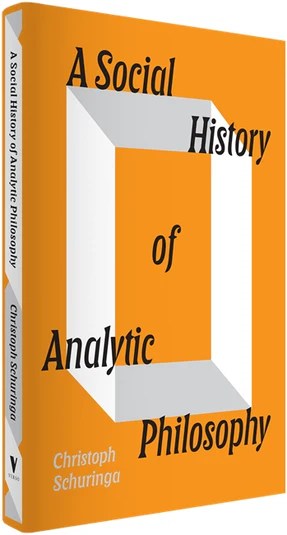
A Social History of Analytic Philosophy: A Discussion with Dr Christoph Schuringa

Analytic philosophy is the leading form of philosophy in the English-speaking world. What explains its continued success? Christoph Schuringa argues that its enduring power can only be understood by examining its social history. Analytic philosophy tends to think of itself as concerned with eternal questions, transcending the changing scenes of history. It thinks of itself as apolitical. This book, however, convincingly shows that the opposite is true.

The origins of analytic philosophy are in a set of distinct movements, shaped by high-ly specific sets of political and social forces. Only after the Second World War were these disparate, often dynamic movements joined together to make ‘analytic philosophy’ as we know it. In the climate of McCarthyism, analytic philosophy was robbed of political force.

To this day, analytic philosophy is the ideology of the status quo. It may seem arcane and largely removed from the real world, but it is a crucial component in upholding liberalism, through its central role in elite educational institutions. As Schuringa concludes, the apparently increasing friendliness of analytic philosophers to rival approaches in philosophy should be understood as a form of colonization; thanks to its hegemonic status, it reformats all it touches in service of its own imperatives, going so far as to colonize decolonial efforts in the discipline.

Christoph Schuringa studied philosophy at King’s College, Cambridge and Birkbeck College, University of London. He has published widely on the history of philosophy and on Marx and Marxism, and is associate professor of philosophy at Northeastern University, London. His writing has appeared in Jacobin, New Left Review, European Journal of Philosophy and elsewhere.

29th Oct

What is a society without a state? Gilles Deleuze and Félix Guattari on social organisation. A Talk by Prof. Henry Somers-Hall 

It is a common starting point when looking at societies to see them in terms of power – the more a society is able to marshal its resources, the more advanced the organisation of that society. In this talk, I want to explore the implications of this assumption for how we conceive of society. I also want to set out the argument by the French philosophers Gilles Deleuze and Félix Guattari for the claim that power, at least in the way we have traditionally understood it, is not central to social organisation, showing some of the possibilities that open up once we reject this assumption. 

Henry Somers-Hall is a professor of philosophy at Royal Holloway, University of London. His work focuses on the interplay between 19th century German idealism and the 20th century French philosophical tradition. His most recent books are Judgement and Sense in Modern French Philosophy (Cambridge University Press: 2022), The Deleuzian Mind (co-edited with Jeffrey Bell, Routledge: 2025)), and Reading A Thousand Plateaus: Adventures in Nomad Thought (forthcoming Edinburgh University Press, 2026). 

12th Nov

The Meaning of Scholasticide: Colonial Strategies and Palestinian Resistance. A talk by Dr. Nadia Naser-Najjab 

Most Palestinians involved in the education system face challenges of considerable scope and intensity. These obstacles have significant impact on educational development, attendance and learning outcomes.  Israel’s relentless efforts to destroy Palestinian education fall under the range of actions prohibited by the Genocide Convention, and more specifically ‘scholasticide’. However, Israeli colonial strategies to constrain and limit the development of the Palestinian education substantially predate the ongoing war, and indeed contemporary wars, in the Gaza Strip, being concretely embodied by Israeli practices across historical Palestine. I will demonstrate this by considering Palestinian in broad perspective and over a long period of time, albeit with particular emphasis on Israel’s targeting of the Palestinian higher education system. In doing so, it will refer to the categorisation of Palestinians and the fragmentation of the land to enable Israel control Palestinian education, censor their narrative and scrutinise students and teachers. I will also show how Palestinians, despite the hardship, do not lose hope, remain resilient and never give up. 

Dr. Nadia Naser-Najjab is Senior lecturer in Palestine Studies, European Centre for Palestine Studies- Institute of Arab and Islamic Studies, University of Exeter. Prior to this, she was an Assistant Professor, Birzeit University, Department of Philosophy and Cultural Studies and the MA program in Arab Contemporary Studies. Nadia holds a PhD in Middle East Studies form the University of Exeter.  

 Her most recent book is Covid-19 in Palestine: The Settler Colonial Context, Bloomsbury Publishing 2024.  

She also published Dialogue in Palestine: The People-to-People Diplomacy Programme and the Israeli-Palestinian Conflict (Bloomsbury Publishing, 2020) 

Her research is based on first-hand experience and original data collection.   

26th Nov

The ideology of economic growth, and its philosophical construction. A talk by Dr Gareth Dale

The ‘growth paradigm’ — i.e. the postulate that economic growth is good, imperative, essentially continuous (even limitless), and the principal remedy for a litany of social problems — is ubiquitous today. For all their differences, Liz Truss and Keir Starmer shared the (specifically triplicate) mantra: ‘growth growth growth.’ Yet in historical terms the domination of growth ideology is recent. The growth paradigm is unique to modernity. This paper will briefly touch upon what is involved in the suggestion that economic growth be understood as ideology, before, in its main part, turning to examine the seventeenth-century emergence and consolidation of growth ideology, paying particular attention to philosophers and economic thinkers. In concluding, the question of ‘degrowth’ will be broached. 

Gareth is Associate Head of the Department of Social and Political Sciences. He worked at Birkbeck, the LSE, and Swansea University before joining Brunel University in 2005. His most recent books are the edited collections Revolutionary Rehearsals in the Neoliberal Age (Haymarket 2021) and Exploring the Thought of Karl Polanyi (Agenda 2019). In 2016 he published Karl Polanyi: A Life on the Left (Columbia UP) and Reconstructing Karl Polanyi: Excavation and Critique (Pluto)and Karl Polanyi: The Hungarian Writings (Manchester UP), and a critical appraisal of ‘Green Growth’ strategies (Zed Books), and The Politics of East European Area Studies (co-edited; Routledge). His earlier books were on Karl Polanyi (Polity, 2010), the political economy of Eastern Europe (Pluto), migrant labour in the European Union (Berg), and a trilogy on East Germany: its economic historyprotest movements, and 1989 revolution (Peter Lang, Routledge, and Manchester UP).

10th Dec

Mattering, Sincerity and Trustworthiness. A talk by Prof. Philip Goodchild

For a philosopher, much contemporary communication lacks substance: it directs attention to that which does not matter, its concerns are often insincere, and its claims are untrustworthy.  So what is substance?  Instead of evaluating things by their price, their impact, their likes, or their fulfilment of arbitrary objectives, it is possible instead to take a philosophical orientation from these problems: what really matters, what is truly sincere, and what is ultimately trustworthy?

These are not simply problems we can formulate ourselves.  They happen to us in any crisis which provokes thought; they are a reason for thinking.  This talk will explore what might be meant by the mattering, sincerity, and trustworthiness of things themselves by describing how such problems arise in contemporary life.

Philip Goodchild is Professor of Religion and Philosophy at the University of Nottingham.  He is the author of several books, including Theology of Money (2007), the Credit and Faith trilogy (2020-21), and Rethinking the Existence of God: Renewing Metaphysics after the Critical Turn (forthcoming) – the Appendix forming the basis for this talk.

All talks will take place at the FCH Campus of the University of Gloucestershire in Rm. HC203 except the social discussion, which is at the Everyman Theatre in Cheltenham.

You can find a map of the campus here: https://www.glos.ac.uk/visit-us/our-campuses/francis-close-hall-campus/

Contact email is: glosphilsoc@gmail.com

We are a local partner of the Royal Institute of Philosophy and these events are funded by a grant from them. Their website can be found here: https://royalinstitutephilosophy.org/.

Spring Programme 2025

5th February

Evil – does it exist and if so, what is it?

Is evil real or just a human construct? Is there a difference between an evil act and one that is merely unfortunate? Can we speak of a radical evil that goes beyond any moral law and towards which there could be no recompense nor forgiveness, such as genocide or the torture of innocents? Kant argued that radical evil was a fundamental flaw of human nature that placed our own selfishness above morality. Perhaps you have your own version of radical evil, or maybe you believe no such thing exists.

This is a social and open discussion meeting. It is a nice opportunity to say ‘hello’ after the Xmas and the New Year and to meet old and new members.

This meeting will take place in the Director’s Lounge at the Everyman Theatre in Cheltenham starting at 7 pm. Here is their website. https://www.everymantheatre.org.uk/

If you want to find out more about what philosophers think about evil, then you might want to read this https://plato.stanford.edu/entries/concept-evil/.

I hope to see you there.

19TH February

Time and how it’s marked, and effects our lives. A discussion led by David Garnett

David has been a member of the GPS for over 12 years and this will be his fourth talk to the Society.

He is a social constructionist and his presentation is based on how individuals and society construct their understanding of the world with the main theme being how we deal with Time and how it’s marked, and effects our lives,  The presentation also includes how we all construct mental models and use them in our daily lives. The session will be part interactive and participants are encouraged to get involved.

5th March

What’s in a Cultural Hegemony: ‘Feel-Good’ Literature, Chronic Fatigue Syndrome (ME/CFS), and Capitalism. A talk by Amélie Doche.

Amélie Doche is an AHRC-funded doctoral researcher in English language and literature at Birmingham City University. Her PhD – carried out in collaboration with the literature development organisation Writing West Midlands – explores discourses of value in contemporary literary culture. Amélie’s articles have appeared in Textual Practice, Iperstoria, The Journal of Languages, Texts, and Society, and English Studies. She’s happy to be contacted via email (amelie.doche@mail.bcu.ac.uk) or on X (@LaDoche).

My talk focuses on hegemonic discourses of value as they intersect with feel-good literature, online discourses of ME/CFS recovery, our culture of immediacy, our society’s fetishisation of self-help (to cure one’s mental and physical diseases) and self-improvement (to increase one’s performance and success). During times of personal and cultural crises, a majority of readers turn to feel-good romance and pop poetry for comfort and escapism. I read the production and reception of Donna Ashworth’s Wild Hope and Kim Nash’s Escape to the Country – among others – diffractively through the lenses of mass-entertainment consumer culture, mental capitalism, performative vulnerability and sincerity (assessed in the author – ad hominem), the instrumentalisation of imagination in popular self-help, and individualism. My presentation is structured into three main sections. The first section explores readers’ attraction to feel-good genres within the context of contemporary cultural dynamics. The second section analyses feel good and discourses of ME/CFS recovery focusing on a specific mode of knowledge activation: archetypal, where the myth of personal salvation is both reinforced and co-created. The final section examines the allure of feel-good genres and discourses of ME/CFS recovery in connection to current tendencies toward magical thinking –an intensified form of positive psychology – and infantilism.

19th March

Forms of Nature: how to draw the line between real nature and manmade copies. A talk by Maria Balaska.

This talk responds to an increasing presence of synthetic nature and the consequent blurring of the boundary between what is natural and what is artificial. It investigates whether and how we can still hold a conceptual distinction between real nature and artificial nature, and our experiences of them. Drawing from Aristotle and Heidegger on the Greek concept of phusis, it rejects the idea that nature is reducible to matter -and therefore not essentially different from what is manmade- and puts forward, instead, a dynamic view of nature as informed and intelligible activity. The fact that qua activities beings by nature are comprehensible and intelligible to us while being irreducible to our own purposes creates a special link between nature and the human mind, which is absent in the case of replicas.

Maria Balaska is a research fellow at the philosophy department of Åbo Akademi University, Finland. She works on Wittgenstein, Heidegger, and the philosophy of psychoanalysis. Her current research project, funded by the KONE Foundation, investigates the conceptual distinction between real and fake nature. Her latest book is Anxiety and Wonder: on Being Human (Bloomsbury, 2024).

2nd April

Deus sive Nature: An Introduction to the Philosophy of Benedict Spinoza. A talk by Christopher Thomas.

Benedict Spinoza has been referred to as ‘The Renegade Jew Who Gave Us Modernity’, but his philosophy nevertheless remains eclipsed by his more famous contemporaries, including Rene Descartes and Gottfried Leibniz. Unlike Descartes’ cogito ergo sum and Leibniz’s principle of sufficient reason, Spinoza’s most significant ideas, including his now infamous phrase Deus sive Natura, remain largely unknown and misunderstood. In this talk I will introduce two of Spinoza’s core ideas: His substance monism and his philosophy of affect and show how the former leads into, and offers a ground to, the latter.

Dr Christopher Thomas is a Senior lecturer in Philosophy at Manchester Metropolitan University. My research interests include early modern philosophy–specifically the philosophy of Benedict Spinoza–, contemporary French philosophy–specifically the philosophy of Gilles Deleuze and Simone Weil–, aesthetics, and art theory.

7th May

The value of anxiety in Kierkegaard and Simone de Beauvoir. A Talk by Erin Plunkett.

Søren Kierkegaard; drawing by Niels Christian Kierkegaard, circa 1840

There has been an explosion of anxiety in recent years, both diagnosed anxiety disorders—the most common mental health disorder worldwide—and wider feelings of anxiety, especially acute among young people. Existentialism and phenomenology offer a rich resource for thinking about the meaning of anxiety, one that has contributed to psychotherapeutic discourse but also diverges from it. While most therapeutic approaches and increasingly educational practices aim at the reduction of anxiety, Kierkegaard and Beauvoir argue for anxiety’s value, particularly for its role in forging a meaningful existence. For Kierkegaard, anxiety is a ‘holy hypochondria’ that won’t allow us to forget the spiritual dimension of ourselves.

Dr Erin Plunkett is Joint Head of Philosophy at the University of Hertfordshire and works on Kierkegaard, phenomenology, existentialism. and philosophy of religion. She is the editor of Kierkegaard and Possibility (2023) and The Selected Writings of Jan Patočka: Care for the Soul (2022), as well as the author of A Philosophy of the Essay (2018).

21st May

AGM

All talks will take place at the FCH Campus of the University of Gloucestershire in Rm. HC203 except the social discussion, which is at the Everyman Theatre in Cheltenham.

You can find a map of the campus here: https://www.glos.ac.uk/visit-us/our-campuses/francis-close-hall-campus/

We are a local partner of the Royal Institute of Philosophy and these events are funded by a grant from them. Their website can be found here: https://royalinstitutephilosophy.org/.
Contact email is: glosphilsoc@gmail.com

Spring Programme 2024

Jan 31st

A Nation of Shopkeepers: The Unstoppable Rise of the Petty Bourgeoisie a talk by Dan Evans

The petty bourgeoisie ― the insecure class between the working class and the bourgeoisie ― is hugely significant within global politics. Yet it remains something of a mystery.

Initially identified as a powerful political force by theorists like Marx and Poulantzas, the petit-bourgeoisie was expected to decline, as small businesses and small property were gradually swallowed up by monopoly capitalism. Yet, far from disappearing, structural changes to the global economy under neoliberalism have instead grown the petty bourgeoisie, and the individualist values associated with it have been popularized by a society which fetishizes “aspiration”, home ownership and entrepreneurship. So why has this happened?

Dr Dan Evans is currently a lecturer in Criminology at Swansea University. His research has been published in numerous academic journals and has recently published a book A Nation of Shopkeepers. He is a public sociologist and has made numerous television and radio appearances and written for popular platforms like Jacobin, The New Statesman, Open Democracy, The Conversation, The Guardian, Planet: The Welsh Internationalist, and more.

Feb 14th

Feb 28th

Michel Serres on Politics, Ethics and the Natural World – Contracts and Translations a talk by David Webb

In 1990, Michel Serres published The Natural Contract, a book on environmental philosophy in which he made what was at the time a radical proposal that nature should be given similar legal rights and protections to people. This idea has since become a reality in many parts of the world, but there was always more to Serres’s proposal than a programme of legislation. His work, spanning nearly sixty years and over sixty books, engages with the history of philosophy, mathematics, the sciences, information theory, cybernetics and much more. Along the way, he devised and practised an almost unique way of thinking in which there is no single principle or logic to guide us through a complex and changing world.

In this talk, I’ll outline Serres’s idea of a ‘natural contract’ and then introduce features of his thinking that mean we cannot take it at face value as a legal artefact. Instead, it becomes a thread that we can follow to think about our relation to nature as a variation on forms of relation within nature itself. I’ll then show how this makes possible a distinctive approach to ethics that can – perhaps must – be developed alongside the legal dimension of the natural contract. With Serres’s work, we can draw virtues from the natural world that can inform a human ethics which is consistent with sustainable processes in nature

David Webb is Professor of Philosophy at Staffordshire University. His interests include Michel Foucault’s conception of critique as a rational practice, and above all the ethical and political significance of the work of Michel Serres. He is co-editor of the series Michel Serres and Material Futures at Bloomsbury Press and is the co-translator with Bill Ross of Serres’s book The Birth of Physics (Rowman and Littlefield, 2018).

March 20th

An Introduction to the Thought and Life of Simone Weil a talk by Christopher Thomas

The philosopher, mystic, labourer, and political activist Simone Weil lived a short life that burned brightly. In recent years the work of this otherwise marginal figure of 20th Century French philosophy has seen a renaissance of interest. Books, talks, conferences and even think pieces have begun turning to the new and unusual vocabulary of this singular thinker.

In this talk, Dr Christopher Thomas, co-founder of the UK Simone Weil Research Network, will outline a little about the life of Simone Weil, before introducing how her unique creation theology leads into her most popular ethical concept, that of attention.

April 24th

Philosophy as a Way of Life a talk by Jill Marsden

Nietzsche once wrote that the product of the philosopher is their ‘life’ and is more important than their works. What might it mean to live philosophically today? Does philosophy as an ‘art of living’ have implications beyond the self-improvement industries?

Jill Marsden is Professor of Literature and Philosophy at the University of Bolton where she teaches in the department of English and Creative Writing.

May 15th

Busting some myths about Hegel and Marx a talk by Gordon Finlayson

Professor Gordon Finlayson teaches philosophy at Sussex. He works on German philosophy and Frankfurt School critical theory, especially Adorno and Habermas. He was a graduate student alongside William Large, back in the day.

All talks will take place at the FCH Campus of the University of Gloucestershire in Rm. HC203.

You can find a map of the campus here: https://www.glos.ac.uk/visit-us/our-campuses/francis-close-hall-campus/

All talks start at 7 pm and usually last for an hour.

We are a local partner of the Royal Institute of Philosophy and these events are funded by a grant from them. Their website can be found here: https://royalinstitutephilosophy.org/.
Contact email is: glosphilsoc@gmail.com